Vessel Docking in Dubai: Mastering Marine Engineering Excellence in the World’s Busiest Maritime Hub

Introduction

Picture this scenario: A fully loaded container vessel approaches Dubai’s bustling port facilities during peak operational hours. The vessel has a 12-hour berthing window to discharge 2,500 TEUs, take on bunkers, complete mandatory inspections, conduct urgent repairs, and reload cargo,all while coordinating with port authorities, pilot services, linesmen, marine engineers, and cargo handlers. A single miscalculation in the vessel docking process or an overlooked marine engineering issue could cascade into delays costing tens of thousands of dollars per hour.

This high-stakes operational reality defines daily maritime activities across Dubai’s world-class port infrastructure. As the Middle East’s preeminent maritime gateway, Dubai handles over 15 million TEUs annually while serving as a critical hub for tanker operations, cruise vessels, and offshore support activities. Success in this demanding environment requires exceptional expertise in both vessel docking procedures and comprehensive marine engineering capabilities.

At Arc Ship Management and Chartering, we’ve orchestrated thousands of successful vessel docking operations across Dubai’s diverse port facilities while delivering marine engineering solutions that keep vessels operating at peak performance. This comprehensive guide reveals the strategies, technical insights, and best practices that separate exceptional maritime operations from merely adequate ones.

Understanding Vessel Docking: More Than Just Mooring a Ship

Vessel docking encompasses far more than simply bringing a ship alongside a berth. It represents a complex, multi-phase operation requiring precise coordination between shipboard teams, shore personnel, port authorities, and marine engineering specialists.

The Complete Docking Lifecycle:

Pre-Arrival Planning begins days or weeks before the vessel reaches Dubai waters. This phase involves berth allocation coordination, pilot booking, tug reservation, marine engineering work scope finalization, spare parts procurement, and regulatory documentation preparation. Effective pre-planning reduces port stay duration by 20-30%, directly impacting operational costs.

Approach and Pilotage commences when vessels enter Dubai’s pilotage waters. Licensed maritime pilots board the vessel, assuming navigational responsibility for the final approach to the berth. During this critical phase, marine engineering teams ensure all propulsion, steering, and auxiliary systems perform flawlessly, as any malfunction during maneuvering creates dangerous situations.

Berthing Operations require millimeter-precision maneuvering, often in challenging conditions including strong currents, limited maneuvering space, and adjacent vessel traffic. Master mariners coordinate with pilots, tug operators, and mooring teams to position the vessel safely against the berth, with marine engineering teams maintaining optimal power and steering response throughout.

Alongside Operations represent the productive phase where cargo operations, bunkering, marine engineering repairs, surveys, crew changes, and provisioning occur simultaneously. Maximizing efficiency during this period directly correlates with operational profitability.

Departure Preparation and Unberthing involves systematic pre-departure checks, final marine engineering systems verification, cargo securing, and coordinated release from berth,essentially reversing the arrival process with equal precision.

Dubai’s Diverse Port Infrastructure: Matching Vessels to Facilities

Dubai’s maritime infrastructure encompasses multiple specialized facilities, each designed for specific vessel types and cargo operations. Understanding these options enables optimal facility selection for your vessel docking requirements.

Jebel Ali Port stands as the world’s ninth-largest container port and the busiest in the Middle East. Its four terminals offer 82 berths with drafts up to 17 meters, accommodating the largest container vessels afloat. The port’s marine engineering support infrastructure includes comprehensive repair workshops, extensive spare parts availability, and round-the-clock technical services.

Port Rashid serves diverse vessel types including cruise ships, general cargo vessels, and Ro-Ro operations. Located closer to central Dubai, this facility offers strategic advantages for vessels requiring access to urban-based marine engineering specialists, equipment suppliers, and crew amenities. The port features 32 berths with varying drafts suitable for most commercial vessels.

Dubai Dry Docks provides comprehensive repair, maintenance, and conversion services across five graving docks and numerous floating docks. This facility handles everything from routine underwater inspections to major vessel conversions, offering complete marine engineering capabilities under one roof.

Mina Rashid Cruise Terminal caters specifically to the booming cruise industry, featuring dedicated passenger facilities alongside comprehensive marine engineering support for luxury cruise vessels with specialized technical requirements.

Offshore and Anchorage Areas serve vessels awaiting berth availability, conducting ship-to-ship transfers, or performing repairs that don’t require alongside berths. These areas still require careful coordination with Dubai’s maritime authorities and often involve marine engineering teams transported to vessels by workboats.

Critical Marine Engineering Considerations for Dubai Operations

Dubai’s unique environmental conditions and operational tempo create specific marine engineering challenges requiring specialized expertise and proactive management.

Extreme Temperature Management: Summer ambient temperatures regularly exceed 45°C, placing extraordinary stress on engine cooling systems, HVAC units, refrigeration equipment, and electrical components. Marine engineering teams operating in Dubai must implement enhanced cooling system monitoring, increased heat exchanger cleaning frequency, and proactive component replacement strategies to prevent heat-related failures.

Seawater Quality and Corrosion: The Arabian Gulf’s high salinity levels accelerate corrosion throughout seawater-cooled systems. Marine engineering best practices in Dubai include aggressive zinc anode replacement schedules, increased frequency of heat exchanger inspections, and specialized coating applications for underwater hull fittings and sea chests.

Fuel Quality Variability: Despite Dubai’s reputation for quality marine fuels, vessels bunkering from various regional sources may encounter inconsistent fuel specifications. Comprehensive marine engineering protocols include mandatory fuel testing, separator optimization, and injection system monitoring to prevent fuel-related machinery problems.

Regulatory Compliance: Dubai Port Authority and UAE maritime authorities enforce strict environmental and safety regulations. Marine engineering teams must ensure vessels meet all applicable requirements including MARPOL Annex VI emissions standards, ballast water treatment system functionality, and oil pollution prevention equipment operability.

Rapid Turnaround Expectations: Dubai’s efficiency-focused port operations demand quick vessel docking turnarounds. Marine engineering work must be meticulously planned and executed to maximize productivity during limited alongside time, requiring pre-positioned parts, coordinated technician scheduling, and precise work sequencing.

Planning a Successful Vessel Docking: Step-by-Step Process

Exceptional vessel docking operations result from detailed planning executed with precision. Here’s the systematic approach proven effective in Dubai’s demanding maritime environment.

Phase 1: Initial Planning (7-14 Days Before Arrival)

Contact Dubai Port Authority to confirm berth availability and reserve preferred docking window. Factor in operational requirements,container vessels need specific crane-equipped berths, tankers require manifold-compatible facilities, and vessels needing marine engineering work should target berths near repair workshops.

Submit required documentation including vessel particulars, cargo declarations, crew lists, maritime declarations of health, and security-related paperwork. Incomplete documentation delays berthing approval and creates costly port stay extensions.

Coordinate with marine engineering service providers to schedule required work. Provide detailed work scopes, parts lists, and estimated durations to enable proper resource allocation. Pre-position critical spare parts at Dubai warehouses to avoid delays waiting for international shipments.

Phase 2: Final Coordination (48-72 Hours Before Arrival)

Confirm pilot boarding time and location, typically at designated pilot stations off Dubai’s coast. Verify tug requirements based on vessel size, weather conditions, and berth configuration,larger vessels often require 3-4 tugs for safe maneuvering.

Reconfirm marine engineering appointments, ensuring technicians, surveyors, and equipment suppliers are scheduled appropriately. Coordinate timing to avoid conflicts between cargo operations, bunkering, and marine engineering activities.

Conduct detailed pre-arrival vessel checks, ensuring all navigation equipment, propulsion systems, steering gear, and deck machinery function perfectly. Any deficiencies discovered at this stage can still be addressed before the critical maneuvering phase.

Phase 3: Arrival Execution (Day of Berthing)

Maintain close communication with port control, providing accurate ETA updates. Pilots board at the designated station, bringing local knowledge of currents, typical wind patterns, and berth-specific approach requirements.

Marine engineering teams ensure all machinery operates optimally during maneuvering,main engines must deliver immediate response, steering gear must exhibit precise control, and auxiliary systems must maintain stable power generation. Bridge teams and engine room personnel maintain constant communication throughout the evolution.

Once alongside, immediately commence planned activities. Delays between berthing and work commencement waste valuable alongside time. Pre-staged marine engineering teams should begin work within 30 minutes of securing alongside.

Phase 4: Alongside Optimization (During Port Stay)

Implement rigorous coordination between competing activities. Cargo operations typically take priority, but marine engineering work often proceeds simultaneously in engine rooms, accommodation spaces, or on deck areas not involved in cargo handling.

Conduct daily progress meetings with cargo planners, marine engineering contractors, chandlers, and other service providers. Address delays immediately rather than discovering timeline slippages at the last minute.

Prepare departure paperwork progressively rather than scrambling during the final hours alongside. Complete customs declarations, port clearances, and marine engineering completion certificates systematically throughout the port stay.

Phase 5: Departure and Debriefing (Final Hours and Post-Departure)

Execute comprehensive pre-departure checks covering all systems critical for safe navigation,steering gear tests, telegraph tests, emergency equipment verification, and marine engineering systems final status confirmation.

Coordinate unberthing with pilot services, tug operators, and port control. Weather windows matter significantly; attempting departure during adverse conditions creates unnecessary risk regardless of schedule pressure.

After clearing port limits, conduct post-departure debriefing with crew and shore management. Identify what went well, what could improve, and lessons learned for future vessel docking operations in Dubai. Document marine engineering work completed and outstanding items for future port calls.

Common Vessel Docking Challenges and Solutions in Dubai

Even meticulously planned vessel docking operations encounter obstacles. Anticipating common challenges and having contingency strategies ready distinguishes excellent operators from average ones.

Challenge 1: Weather-Related Delays

Dubai’s shamal winds can create challenging berthing conditions, occasionally forcing vessels to delay arrival or remain at anchorage. While frustrating, attempting berthing in unsafe conditions risks vessel damage, berth damage, and personnel injury.

Solution: Monitor weather forecasts continuously during the approach phase. Maintain flexible scheduling that accommodates weather-related adjustments. Communicate proactively with charter parties and cargo interests about weather-driven delays, providing professional weather reports rather than vague explanations.

Challenge 2: Berth Availability Changes

Port congestion occasionally forces last-minute berth reassignments, potentially impacting carefully planned operations. A vessel expecting to berth at a facility with convenient marine engineering workshop access might get reassigned to a remote berth requiring additional transportation time for technicians.

Solution: Develop contingency plans for alternative berths. Maintain relationships with marine engineering service providers offering mobile capabilities who can work effectively at any berth location. Build schedule buffers that accommodate minor berth assignment changes without cascading delays.

Challenge 3: Parts and Supply Delays

Despite Dubai’s excellent logistics infrastructure, critical spare parts occasionally arrive late, potentially extending port stays and triggering expensive demurrage.

Solution: Order long-lead-time items well in advance. Utilize Dubai-based marine engineering suppliers maintaining extensive local inventory for common components. For truly critical items, consider air freight rather than sea freight to ensure timely availability.

Challenge 4: Coordination Failures

Multiple service providers working simultaneously,cargo handlers, marine engineering contractors, chandlers, surveyors,sometimes conflict, creating inefficiency and delays.

Solution: Designate a single point of coordination (typically the Chief Officer for operational matters and Chief Engineer for marine engineering work) who maintains the master schedule and resolves conflicts. Conduct brief morning coordination meetings during multi-day port stays, ensuring all parties understand daily priorities and potential conflicts.

Marine Engineering Capabilities: What Dubai Offers

Dubai’s development as a maritime center has attracted comprehensive marine engineering expertise, creating one-stop capability for virtually any vessel requirement.

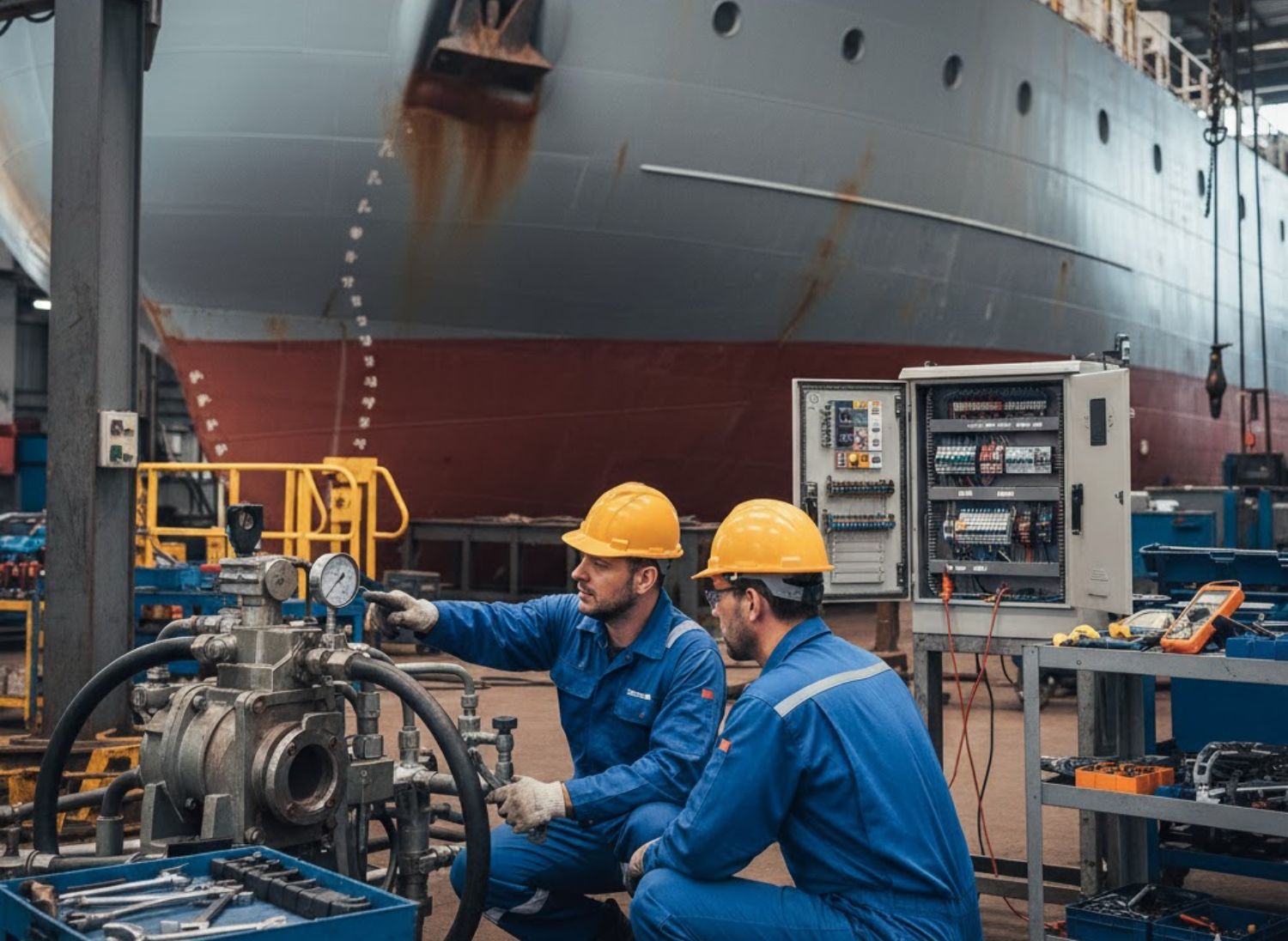
Emergency Repairs and Troubleshooting: Round-the-clock marine engineering teams respond to urgent breakdowns, providing diagnostic expertise and rapid repair capabilities. Whether facing electrical failures, hydraulic problems, automation issues, or machinery breakdowns, Dubai-based engineers deliver solutions that minimize operational disruption.

Planned Maintenance and Overhauls: Scheduled alongside time provides opportunities for maintenance activities impractical at sea. Dubai’s marine engineering workshops execute main engine overhauls, generator servicing, pump rebuilds, valve replacements, and countless other maintenance tasks with efficiency honed by thousands of similar projects.

Specialized Technical Services: Beyond basic mechanical repairs, Dubai offers specialized marine engineering capabilities including electronic navigation equipment calibration, automation system programming, dynamic positioning system servicing, propulsion control system maintenance, and sophisticated electrical troubleshooting.

Classification Society Surveys: All major classification societies maintain Dubai offices with surveyor availability for annual surveys, intermediate surveys, machinery inspections, and special surveys. This accessibility streamlines regulatory compliance, enabling efficient scheduling that minimizes port stay extensions.

Underwater Services: Without requiring drydocking, Dubai-based diving companies execute underwater hull inspections, propeller polishing, sea chest cleaning, anode replacement, and minor underwater repairs. These services maintain vessel performance between drydocking periods.

Testing and Commissioning: For vessels installing new equipment or completing major repairs, Dubai’s marine engineering infrastructure supports comprehensive testing protocols, load bank testing, performance trials, and commissioning procedures that verify work quality before departure.

Optimizing Costs During Vessel Docking Operations

Port costs, service fees, and alongside time expenses accumulate rapidly during vessel docking operations. Strategic approaches minimize these costs without compromising safety or work quality.

Minimize Port Stay Duration: Every hour alongside incurs port charges, often ranging from hundreds to thousands of dollars depending on vessel size. Efficient pre-planning, coordinated execution, and parallel activity scheduling reduce total alongside time, directly cutting port costs. A container vessel reducing port stay from 18 hours to 14 hours might save $8,000-$12,000 in port charges alone.

Bundle Marine Engineering Services: Scheduling multiple marine engineering tasks during a single port call proves far more economical than multiple short calls. Travel time, mobilization costs, and minimum service charges apply whether technicians work two hours or ten. Batching work into efficient blocks maximizes value from service provider expenses.

Leverage Dubai’s Competitive Market: Dubai’s concentration of marine engineering service providers creates healthy competition. Obtaining multiple quotations for non-emergency work often reveals significant price variations. However, balance cost against quality,the cheapest provider isn’t always the best value if work quality proves substandard.

Optimize Timing: Port charges often vary by time of day, day of week, or season. If operational flexibility exists, scheduling vessel docking during lower-rate periods generates savings. Similarly, marine engineering service providers sometimes offer better rates during their slower periods.

Prevent Rather Than Repair: The most cost-effective marine engineering is preventive maintenance that avoids breakdowns entirely. Vessels implementing comprehensive preventive programs rarely face expensive emergency repairs during port calls, eliminating both the premium cost of emergency services and the potentially massive cost of extended port stays.

Safety Considerations for Vessel Docking and Marine Engineering

Safety represents the maritime industry’s paramount value, and vessel docking operations combined with marine engineering work create numerous hazards requiring disciplined management.

Mooring Safety: Parting mooring lines under tension can cause catastrophic injuries. Establish and enforce exclusion zones around bitts, fairleads, and line runs. Never stand in the “line of fire”,the path a parting line would travel. Use synthetic mooring lines where appropriate, as they store less energy than steel wire and create less hazardous recoil if parting.

Working at Heights: Marine engineering work often involves accessing elevated equipment,funnel platforms, mast-mounted antennas, or overhead piping. Implement comprehensive fall protection using proper harnesses, lanyards, and anchor points. Never skip fall protection for “quick” tasks; most accidents occur during brief jobs where personnel shortcut safety procedures.

Confined Space Entry: Engine room tankage, double bottoms, and void spaces require marine engineering access for inspection and maintenance. Treat these areas as confined spaces requiring atmospheric testing, ventilation, standby personnel, communication equipment, and emergency rescue plans before entry.

Hot Work Permits: Welding, cutting, and grinding during marine engineering repairs create fire and explosion hazards. Implement formal hot work permit systems requiring fire watches, portable firefighting equipment positioning, and flammable material removal from work areas.

Contractor Safety Management: External marine engineering contractors may have different safety cultures than vessel crews. Brief contractors on vessel-specific hazards, require them to follow vessel safety procedures, and assign crew members to supervise contractor activities. Don’t assume contractors automatically understand marine safety requirements.

Simultaneous Operations (SIMOPS): When marine engineering work occurs simultaneously with cargo operations or bunkering, establish clear communication protocols and segregation measures. Cargo holds being worked should be clearly marked as no-access for marine engineering personnel to prevent conflicts.

Technology Transforming Vessel Docking and Marine Engineering

Digital innovation revolutionizes traditional maritime operations, offering capabilities that seemed impossible just years ago. Forward-thinking operators embrace these technologies to gain competitive advantages.

Digital Port Call Optimization: Advanced platforms coordinate all participants in vessel docking operations,shipping lines, port authorities, pilots, agents, and service providers,through shared digital platforms. Real-time visibility into port conditions, berth availability, and service provider scheduling enables dynamic optimization that reduces port stay duration and improves resource utilization.

Remote Marine Engineering Diagnostics: Modern vessel machinery systems collect operating data that shore-based marine engineering experts analyze remotely. Emerging problems trigger alerts long before crew members notice symptoms, enabling proactive parts ordering and technician scheduling before the vessel even reaches Dubai.

Augmented Reality (AR) Maintenance Support: Marine engineering technicians wearing AR glasses receive real-time guidance from shore-based experts who see exactly what the technician sees. Complex repairs proceed faster with fewer errors when less experienced personnel receive expert support regardless of physical location.

3D Printing for Spare Parts: Dubai’s marine engineering sector increasingly uses additive manufacturing to produce certain spare parts on demand. Rather than waiting days for international shipment of a non-critical component, metal or polymer 3D printing produces replacement parts within hours, reducing vessel docking delays.

Autonomous Berthing Systems: Advanced vessels now feature automated docking systems using sensors, GPS, and propulsion control to berth with minimal human intervention. While not yet universal, this technology will gradually reduce pilotage requirements for routine vessel docking operations, though specialized situations will still require traditional piloting expertise.

Selecting the Right Marine Engineering Partner

Dubai hosts hundreds of marine engineering service providers, making partner selection crucial for operational success. Consider these factors when evaluating potential partners:

Technical Capability Breadth: Does the provider offer comprehensive capabilities covering propulsion systems, electrical systems, automation, hydraulics, deck machinery, and accommodation systems? Single-source providers simplify coordination compared to managing multiple specialized contractors.

Response Time Reliability: In maritime operations, time equals money. Providers promising rapid response must consistently deliver. Request references from current clients about actual response times, not just marketing promises.

Quality and Safety Records: Substandard marine engineering work creates risks far exceeding any cost savings. Investigate providers’ safety records, quality control processes, technician qualifications, and whether they hold relevant ISO certifications or classification society approvals.

Parts Supply Integration: Providers with strong relationships to parts suppliers or maintaining their own parts inventory reduce delays. The best marine engineering companies often supply parts seamlessly as part of repair services rather than requiring vessel operators to source parts separately.

Communication and Documentation: Professional marine engineering providers communicate clearly throughout work execution, document work thoroughly, and provide comprehensive completion reports. This professionalism proves invaluable for record-keeping, insurance claims, and classification society submissions.

Arc Ship Management and Chartering maintains long-standing relationships with Dubai’s premier marine engineering service providers, enabling our clients to access proven expertise efficiently. Our technical superintendents personally oversee complex marine engineering projects, ensuring work quality meets the high standards commercial vessel operations demand.

Environmental Compliance in Dubai Waters

UAE maritime authorities enforce increasingly stringent environmental regulations, and non-compliance creates financial penalties and reputational damage. Vessel docking operations and marine engineering activities must address these requirements.

Emissions Control: Dubai falls within regions where MARPOL Annex VI emissions limits apply. Vessels must demonstrate compliance with sulfur oxide limitations (currently 0.50% fuel sulfur content globally, with even lower limits in designated emission control areas). Marine engineering teams should verify fuel quality, emission control system operation, and maintain documentation proving compliance.

Wastewater Management: Discharge of sewage within Dubai’s territorial waters requires approved treatment systems meeting international standards. Many berths provide shore-side sewage reception, and vessels should utilize these facilities rather than discharging treated wastewater alongside.

Garbage and Waste: Dubai Port Authority provides comprehensive waste reception facilities for garbage, oily waste, sludge, and contaminated materials. Proper segregation and disposal through approved channels is mandatory. Marine engineering work often generates waste materials requiring proper classification and shore disposal.

Ballast Water Treatment: Vessels conducting ballast operations in UAE waters must comply with ballast water management regulations. Marine engineering teams maintain ballast water treatment systems, document treatment operations, and ensure record books accurately reflect compliance activities.

Oil Pollution Prevention: Equipment failures creating oil pollution during vessel docking operations trigger severe penalties and potentially vessel detention. Marine engineering preventive maintenance of bilge systems, oil-water separators, and fuel transfer equipment prevents environmentally damaging incidents.

Conclusion: Excellence in Vessel Docking and Marine Engineering

Success in Dubai’s competitive maritime environment demands operational excellence across every dimension,from meticulous vessel docking planning through expert marine engineering execution. The strategies, insights, and best practices outlined throughout this guide reflect decades of collective experience managing vessel operations in one of the world’s most dynamic maritime hubs.

Vessel docking operations represent far more than simply bringing a ship alongside a berth. They’re complex orchestrations requiring precise coordination among dozens of participants, all working toward common objectives: safety, efficiency, regulatory compliance, and cost-effectiveness. Similarly, marine engineering excellence extends beyond simply fixing broken equipment to encompass proactive maintenance, predictive diagnostics, and strategic partnerships that keep vessels operating reliably.

Dubai’s maritime infrastructure,world-class ports, comprehensive marine engineering capabilities, efficient regulatory processes, and deep technical expertise,provides vessel operators with exceptional resources. The question isn’t whether these resources exist, but whether your operations fully leverage them to maximum advantage.

Arc Ship Management and Chartering brings comprehensive expertise in both vessel docking coordination and marine engineering management to commercial vessel operators throughout the Middle East and beyond. Our technical superintendents understand the nuances of Dubai’s maritime environment, maintain relationships with proven service providers, and deliver the hands-on oversight that ensures every port call achieves its objectives efficiently and safely.

Whether you’re planning a single vessel call to Dubai or managing regular operations through UAE ports, partnering with experienced professionals transforms routine port calls into competitive advantages. Efficient vessel docking saves time and money. Expert marine engineering prevents costly breakdowns. Professional coordination reduces stress and uncertainty.

The maritime industry continually evolves, with new technologies, changing regulations, and rising expectations. Operators who embrace best practices, leverage available expertise, and commit to continuous improvement position themselves for sustained success regardless of industry challenges.

Transform Your Dubai Port Operations

Contact Arc Ship Management and Chartering today to discuss how our vessel docking coordination and marine engineering expertise delivers measurable operational improvements. Our technical teams stand ready to support your vessels throughout Dubai’s maritime facilities with professionalism, expertise, and unwavering commitment to excellence.
Preventive Ship Repair: The Ultimate Guide to Marine Maintenance in Dubai

Introduction

When a cargo vessel breaks down mid-voyage in the Arabian Gulf, the financial consequences cascade rapidly: daily charter fees continue accumulating, cargo delivery deadlines slip, port authorities impose penalties, and crew morale plummets. For ship owners and operators in Dubai’s bustling maritime sector, this nightmare scenario is entirely preventable. The solution? A comprehensive preventive ship repair strategy that transforms maintenance from a reactive expense into a strategic investment.

Dubai’s position as a global maritime crossroads makes it home to thousands of vessels requiring world-class marine maintenance services. Yet many operators still approach ship repair reactively, waiting for systems to fail before taking action. This outdated mindset costs the industry billions annually in emergency repairs, lost operational time, and compromised safety records. At Arc Ship Management and Chartering, we’ve witnessed firsthand how preventive maintenance transforms vessel operations, extending equipment lifespan by 40-60% while reducing unexpected repair costs by up to 75%.

This comprehensive guide explores practical preventive ship repair strategies specifically tailored for Dubai’s unique maritime environment, offering actionable insights that ship managers, technical superintendents, and vessel owners can implement immediately.

Understanding Preventive Ship Repair: Beyond Basic Maintenance

Preventive ship repair represents a fundamental shift from “fix it when it breaks” to “maintain it before it fails.” This proactive philosophy encompasses scheduled inspections, condition-based monitoring, predictive analytics, and systematic component replacement before failure occurs.

The Three Pillars of Preventive Maintenance:

Time-Based Maintenance follows manufacturer recommendations and regulatory requirements, performing interventions at predetermined intervals regardless of equipment condition. Engine overhauls every 8,000 running hours or annual hull inspections exemplify this approach.

Condition-Based Maintenance monitors actual equipment performance through sensors, vibration analysis, oil sampling, and thermal imaging. Repairs occur when data indicates declining performance, optimizing the timing between premature replacement and catastrophic failure.

Predictive Maintenance leverages advanced analytics and machine learning to forecast component failures weeks or months in advance, enabling perfectly timed interventions that maximize component lifespan while minimizing downtime.

For vessels operating in Dubai’s demanding conditions,extreme heat, high humidity, corrosive saltwater environment, and frequent port calls,this preventive approach isn’t optional; it’s essential for maintaining operational excellence.

Critical Systems Requiring Preventive Attention in Dubai’s Climate

Dubai’s maritime environment presents unique challenges that accelerate wear on specific vessel systems. Understanding these vulnerabilities enables targeted preventive strategies.

Main Engine and Auxiliary Systems: The region’s consistently high ambient temperatures (often exceeding 45°C in summer) stress cooling systems exceptionally. Preventive maintenance should include quarterly coolant analysis, heat exchanger cleaning every 6 months, and thermal efficiency testing. Fuel quality variations in regional bunkering ports necessitate frequent fuel filter inspections and injector cleaning to prevent performance degradation.

Hull and Coating Systems: The Arabian Gulf’s warm, saline waters promote accelerated biofouling and corrosion. Implementing a preventive hull maintenance schedule,including underwater inspections every 3-4 months, propeller polishing, and proactive coating touch-ups,maintains fuel efficiency and prevents costly drydock extensions. Studies show that vessels with quarterly hull cleaning maintain 5-8% better fuel efficiency compared to those cleaned only during scheduled drydockings.

HVAC and Refrigeration Units: Accommodation cooling systems work overtime in Dubai’s climate, making them prime candidates for preventive care. Monthly filter replacements, quarterly refrigerant level checks, and annual compressor overhauls prevent system failures that affect crew welfare and cargo integrity for refrigerated vessels.

Electrical and Automation Systems: High humidity combined with salt air creates ideal conditions for electrical component corrosion. Preventive maintenance programs should include monthly insulation resistance testing, quarterly control panel inspections, and semi-annual cable termination checks to avoid electrical fires and system failures.

Developing Your Preventive Maintenance Schedule: A Practical Framework

Creating an effective preventive ship repair schedule requires balancing manufacturer recommendations, classification society requirements, operational demands, and budget constraints. Here’s a systematic approach proven effective in Dubai’s maritime sector.

Step 1: Conduct a Comprehensive Equipment Inventory Document every critical system aboard, including manufacturer details, installation dates, maintenance history, and failure criticality. This baseline assessment identifies high-priority equipment requiring intensive monitoring versus lower-risk systems suitable for extended maintenance intervals.

Step 2: Establish Risk-Based Prioritization Not all equipment failures carry equal consequences. A main engine breakdown creates catastrophic operational and financial impacts, while a galley appliance failure represents minor inconvenience. Assign risk scores (combining failure probability and consequence severity) to allocate preventive maintenance resources appropriately.

Step 3: Create Interval-Based Task Lists Organize maintenance activities into daily, weekly, monthly, quarterly, annual, and drydocking intervals. Daily tasks might include visual inspections and log readings, while annual activities encompass major overhauls and regulatory surveys. This structure ensures nothing falls through the cracks while distributing workload manageably across time.

Step 4: Implement Digital Maintenance Management Modern Planned Maintenance Systems (PMS) automate scheduling, track spare parts consumption, generate work orders, and provide analytics on maintenance effectiveness. Digital systems eliminate the manual paperwork burden that causes many preventive programs to fail, while providing real-time visibility for shore-based technical managers.

Step 5: Build Buffer Capacity for Dubai Port Stays Dubai’s efficient port operations mean vessels often have limited time alongside. Structure your preventive maintenance schedule to maximize work during port stays, pre-positioning spare parts and coordinating shore-based technicians to complete multiple tasks during each call.

Essential Preventive Maintenance Practices: Samples and Real-World Applications

Let’s examine specific preventive maintenance practices that deliver measurable results for vessels operating in Dubai waters.

Sample 1: Comprehensive Cooling System Preventive Program

Background: A 15-year-old container vessel experienced three emergency main engine shutdowns within six months due to cooling system failures, costing approximately $450,000 in lost charter income and emergency repairs.

Preventive Solution Implemented:

  • Weekly coolant pH and concentration testing
  • Monthly visual inspection of all heat exchangers with performance logging
  • Quarterly zinc anode replacement on seawater-cooled systems
  • Bi-annual coolant system flushing and chemical cleaning
  • Annual thermographic scanning of cooling system piping

Results: Zero cooling-related shutdowns over the subsequent 18 months, with measured fuel efficiency improvements of 3.2% due to optimal engine operating temperatures. Total preventive program cost: $28,000 annually,a 16:1 return on investment.

Sample 2: Predictive Bearing Monitoring Program

Background: A bulk carrier suffered a catastrophic main shaft bearing failure requiring emergency drydocking in Dubai, incurring $780,000 in repair costs plus 12 days lost operational time.

Preventive Solution Implemented:

  • Installation of continuous vibration monitoring sensors on all main shaft bearings
  • Monthly oil sampling with spectrographic analysis
  • Quarterly ultrasonic thickness measurements
  • Thermal imaging during quarterly inspections
  • Predictive analytics software tracking bearing condition trends

Results: System detected early wear indicators 6 weeks before projected failure, enabling planned repair during a scheduled drydocking. Repair cost: $140,000 (avoiding the emergency premium), with zero operational downtime impact. The monitoring system paid for itself in the first incident alone.

Sample 3: Fuel System Preventive Maintenance Protocol

Background: Inconsistent fuel quality from various bunkering locations caused fuel injection system problems, resulting in reduced engine performance and increased maintenance costs.

Preventive Solution Implemented:

  • Fuel sampling and analysis at every bunkering operation
  • Daily fuel separator monitoring with sludge analysis
  • Weekly fuel filter differential pressure checks
  • Monthly fuel injector spray pattern testing
  • Quarterly fuel system cleaning with approved additives
  • Annual fuel tank inspection and cleaning

Results: Fuel-related engine problems dropped by 87%, with measurable improvements in fuel consumption (4.1% reduction) and engine performance consistency. The program identified three occasions where contaminated bunkers would have caused severe engine damage if used without additional treatment.

Sample 4: Hull Performance Optimization Program

Background: A tanker operating in Gulf waters experienced steady fuel consumption increases, adding approximately $320,000 annually in excess fuel costs.

Preventive Solution Implemented:

  • Underwater hull inspections every 90 days using ROV technology
  • Hydrodynamic performance monitoring using noon report data analysis
  • Proactive in-water hull cleaning when performance degradation exceeds 3%
  • Propeller polishing during hull cleaning operations
  • Application of advanced foul-release coatings during drydocking

Results: Maintained fuel efficiency within 2% of post-drydock performance throughout the operational period. Over 30 months between drydockings, the program saved approximately $425,000 in excess fuel costs while eliminating need for drydocking extension to address heavy fouling. Program cost: $85,000, delivering a 5:1 ROI.

Leveraging Dubai’s Marine Maintenance Infrastructure

Dubai’s strategic development as a maritime services hub provides vessel operators with exceptional resources for implementing preventive ship repair programs. Understanding and utilizing this infrastructure maximizes program effectiveness.

World-Class Repair Facilities: Dubai hosts modern shipyards equipped for repairs ranging from routine maintenance to major conversions. Drydock World Dubai, Jadaf Dubai Shipyard, and other facilities offer comprehensive services with short booking lead times compared to many global alternatives. Scheduling preventive drydockings in Dubai provides cost advantages while maintaining access to experienced technical specialists.

24/7 Spare Parts Availability: The emirate’s position as a global logistics center means critical spare parts are often available within hours rather than days. Establishing relationships with Dubai-based marine equipment suppliers enables just-in-time maintenance practices, reducing onboard spare parts inventory costs while ensuring rapid access when needed.

Technical Expertise and Certification: Dubai attracts highly skilled marine engineers, electricians, and technical specialists from around the world. This talent pool enables vessel operators to supplement crew expertise with shore-based specialists for complex preventive maintenance tasks, ensuring work meets classification society standards.

Classification Society Presence: All major classification societies maintain offices in Dubai, enabling rapid survey scheduling, technical consultations, and approval processes. This accessibility streamlines preventive maintenance planning, particularly for tasks requiring surveyor attendance or approval.

Financial Benefits: Quantifying Preventive Maintenance ROI

Ship operators naturally question whether preventive maintenance justifies its upfront costs. Comprehensive data demonstrates unequivocally that proactive programs deliver substantial financial returns.

Reduced Emergency Repair Costs: Emergency repairs typically cost 3-5 times more than planned maintenance due to premium technician rates, expedited parts shipping, and lack of competitive bidding. A vessel spending $200,000 annually on preventive maintenance typically avoids $500,000-$800,000 in emergency repair expenses.

Minimized Operational Downtime: Each day a commercial vessel sits idle for repairs represents lost charter income. For a medium-sized container vessel, daily charter rates often exceed $15,000-$25,000. Preventive maintenance that avoids just two days of unplanned downtime annually saves $30,000-$50,000 in lost income,often covering the entire annual preventive program cost.

Extended Equipment Lifespan: Properly maintained machinery operates reliably for significantly longer periods before requiring major overhauls or replacement. Main engines receiving excellent preventive care routinely exceed manufacturer-recommended operating hours by 20-30% before major rebuild, deferring capital expenses.

Improved Fuel Efficiency: Clean hulls, properly tuned engines, and well-maintained propulsion systems deliver measurable fuel savings. For vessels consuming 30-40 tons of fuel daily, even a 3-5% efficiency improvement from preventive maintenance generates annual savings of $250,000-$500,000 at current fuel prices.

Enhanced Resale Value: Vessels with documented preventive maintenance programs command premium prices in the second-hand market. Buyers recognize that well-maintained ships present lower operational risks and require less immediate capital investment, making comprehensive maintenance records valuable assets.

Implementing Your Preventive Program: Getting Started with Arc Ship Management and Chartering

Transitioning from reactive to preventive maintenance requires structured implementation, technical expertise, and sustained commitment. Here’s how to begin your journey toward operational excellence.

Phase 1: Assessment and Planning (Weeks 1-4) Partner with experienced marine technical managers to conduct comprehensive vessel condition surveys. Document current maintenance practices, identify critical equipment vulnerabilities, and establish baseline performance metrics. This assessment phase creates the foundation for targeted preventive strategies.

Phase 2: Program Design and Resource Allocation (Weeks 5-8) Develop customized preventive maintenance schedules aligned with your vessel’s operational profile, trade routes, and specific equipment configurations. Establish spare parts stocking strategies, identify required technical training for crew members, and select appropriate maintenance management software platforms.

Phase 3: Initial Implementation (Months 3-6) Begin executing preventive maintenance tasks while maintaining flexibility to adjust intervals and procedures based on real-world results. This phase emphasizes crew training, procedure documentation, and establishing communication protocols between ship and shore teams.

Phase 4: Optimization and Continuous Improvement (Ongoing) Analyze maintenance data to identify trends, refine task intervals, and implement predictive maintenance technologies where appropriate. Regular program reviews ensure your preventive maintenance evolves with your operational needs and incorporates technological advances.

Arc Ship Management and Chartering brings decades of marine maintenance expertise to vessel operators throughout Dubai and the broader Middle East region. Our technical teams understand the unique challenges of Gulf operations and design preventive programs that deliver measurable operational and financial benefits. Whether managing a single vessel or an entire fleet, our comprehensive approach ensures your assets maintain peak performance while minimizing unexpected disruptions.

Overcoming Common Implementation Challenges

Even well-designed preventive maintenance programs encounter obstacles. Anticipating these challenges and having mitigation strategies ready increases program success rates.

Challenge 1: Crew Resistance to Change Crews accustomed to reactive maintenance may initially resist preventive programs, viewing additional tasks as unnecessary workload increases. Address this through education about program benefits, involving experienced crew members in program design, and celebrating early successes that demonstrate value.

Challenge 2: Budget Constraints Preventive maintenance requires upfront investment before delivering returns. Build support by quantifying current reactive maintenance costs, presenting ROI projections, and implementing programs incrementally, starting with highest-risk systems where benefits emerge quickly.

Challenge 3: Maintaining Consistency Operational pressures sometimes tempt crews or managers to defer preventive tasks. Combat this through automated scheduling systems, regular technical superintendent oversight, and including preventive maintenance performance metrics in crew evaluations.

Challenge 4: Spare Parts Management Effective preventive programs require parts availability without excessive inventory investment. Solve this through strategic partnerships with Dubai-based suppliers offering rapid delivery, implementing just-in-time inventory practices for non-critical components, and maintaining adequate stocks only for high-criticality items or long-lead-time components.

Future Trends: The Evolution of Preventive Ship Repair

Maritime maintenance continues evolving through technological innovation and data analytics. Understanding emerging trends positions forward-thinking operators for competitive advantages.

Digital Twins and Simulation: Advanced software creates virtual replicas of shipboard systems, enabling maintenance teams to simulate equipment performance under various conditions, predict optimal intervention timing, and test maintenance strategies without risking actual equipment.

Internet of Things (IoT) Integration: Expanded sensor networks provide unprecedented visibility into equipment condition, transmitting real-time data to shore-based analytics platforms that detect anomalies instantly and recommend preventive actions.

Artificial Intelligence and Machine Learning: AI algorithms analyze maintenance history, operational data, and environmental conditions across entire fleets, identifying patterns invisible to human analysts and continuously refining maintenance interval recommendations.

Autonomous Inspection Technologies: Drones and robotic systems increasingly handle dangerous or difficult inspection tasks,hull inspections, tank surveys, and confined space assessments,improving inspector safety while increasing inspection frequency and quality.

Conclusion: Investing in Prevention, Securing Operational Excellence

The maritime industry’s transition from reactive to preventive maintenance represents more than operational methodology,it’s a fundamental business philosophy emphasizing long-term value over short-term cost minimization. For vessels operating in Dubai’s dynamic maritime environment, preventive ship repair delivers quantifiable benefits: dramatically reduced emergency expenses, minimized operational disruptions, extended equipment lifespan, and enhanced safety performance.

The samples and strategies outlined throughout this guide demonstrate that preventive maintenance isn’t theoretical,it’s practical, proven, and profitable. Vessels implementing comprehensive programs consistently outperform reactive counterparts across every meaningful metric: operational reliability, financial performance, environmental compliance, and safety records.

Dubai’s position as a global maritime center provides vessel operators with exceptional resources for implementing world-class preventive maintenance programs. From advanced repair facilities to 24/7 spare parts availability and deep technical expertise, the infrastructure supporting marine excellence exists. The question isn’t whether preventive maintenance works,decades of data confirm it does. The question is whether you’ll invest in prevention now or pay significantly more for reactive repairs later.

Arc Ship Management and Chartering stands ready to partner with vessel operators throughout the region, bringing comprehensive technical expertise, proven preventive maintenance methodologies, and unwavering commitment to operational excellence. Our teams understand that every vessel presents unique challenges and opportunities, and we design customized programs that deliver measurable results aligned with your specific operational requirements.

Begin your preventive maintenance journey today. Contact our technical team to schedule a comprehensive vessel assessment and discover how proactive care transforms operational performance while protecting your maritime investments for years to come.

Ready to Transform Your Vessel Maintenance Approach?

Connect with Arc Ship Management and Chartering’s technical experts to discuss your specific requirements and learn how our preventive ship repair programs deliver measurable operational and financial benefits. Don’t wait for the next breakdown,invest in prevention now.

Best Ship Repair in Dubai: Your Complete Guide to Premier Marine Repair Services in the UAE

Introduction

When your vessel requires maintenance, repair, or emergency services in the Middle East’s busiest maritime hub, finding the best ship repair in Dubai isn’t just about convenience, it’s about protecting your investment, ensuring crew safety, and maintaining operational excellence. With Dubai handling over 15 million TEUs annually and serving as a critical gateway between East and West, the city has evolved into one of the world’s most sophisticated maritime service centers.

Whether you’re dealing with routine maintenance, unexpected damages, or comprehensive overhauls, the quality of ship repair services you choose can significantly impact your vessel’s performance, safety compliance, and bottom line. This comprehensive guide will navigate you through everything you need to know about ship repair UAE services, helping you make informed decisions for your maritime operations.

Why Dubai Stands Out as a Global Ship Repair Hub

Dubai’s strategic location at the crossroads of international shipping routes has transformed it into a maritime powerhouse. The emirate’s investment in world-class infrastructure, combined with its business-friendly environment, has attracted leading marine repair service providers from around the globe.

The city’s dry docks can accommodate vessels of all sizes from luxury yachts to massive cargo carriers and oil tankers. Dubai’s ship repair facilities operate with cutting-edge technology, certified technicians, and adherence to international maritime standards including IMO, SOLAS, and classification society requirements.

Key advantages of choosing Dubai for ship repairs include:

  • Strategic Geographic Position: Minimal deviation from major shipping routes between Asia, Europe, and Africa
  • State-of-the-Art Facilities: Modern dry docks, floating docks, and alongside berths equipped with advanced lifting and repair equipment
  • Rapid Turnaround Times: Efficient processes and 24/7 operations minimize vessel downtime
  • Regulatory Compliance: Full adherence to international maritime regulations and environmental standards
  • Skilled Workforce: Highly trained technicians and engineers with extensive experience across vessel types
  • Comprehensive Services: One-stop solutions from routine maintenance to complex retrofits

Understanding Marine Repair Services Dubai: What’s Available

Marine repair services Dubai encompasses a broad spectrum of specialized solutions designed to keep vessels seaworthy, compliant, and operating at peak efficiency. At arc ship management and chartering, we understand that each vessel has unique requirements based on its type, age, operational profile, and trading routes.

Hull and Structural Repairs

The hull is your vessel’s first line of defense against the harsh marine environment. Professional hull repair services include:

  • Hull Cleaning and Painting: Removal of marine growth, surface preparation, and application of anti-fouling coatings to improve fuel efficiency
  • Steel Plate Replacement: Repair or replacement of corroded or damaged hull plates using certified welding procedures
  • Structural Reinforcement: Strengthening of compromised structural members to restore vessel integrity
  • Crack Repair and Detection: Advanced NDT (Non-Destructive Testing) methods including ultrasonic testing and magnetic particle inspection

Propulsion System Maintenance

Your vessel’s propulsion system is critical to operational reliability. Comprehensive services include:

  • Main Engine Overhauls: Complete disassembly, inspection, repair, and reassembly of main propulsion engines
  • Propeller Repairs: Blade straightening, balancing, polishing, and replacement services
  • Shaft Line Services: Inspection, alignment, and repair of propeller shafts, stern tubes, and bearings
  • Thruster Maintenance: Overhaul and repair of bow and stern thrusters for enhanced maneuverability

Electrical and Electronic Systems

Modern vessels rely heavily on sophisticated electrical and electronic systems. Expert technicians provide:

  • Electrical System Diagnostics: Comprehensive testing and troubleshooting of power generation and distribution systems
  • Navigation Equipment Calibration: Ensuring ECDIS, radar, GPS, and communication systems meet SOLAS requirements
  • Automation System Repairs: Servicing of engine room automation, bridge systems, and monitoring equipment
  • Emergency Generator Services: Maintenance and repair of auxiliary power systems

Deck and Accommodation Work

Maintaining deck equipment and crew comfort areas ensures operational efficiency and crew welfare:

  • Cargo Handling Equipment: Repair and certification of cranes, winches, and cargo securing systems
  • Hatch Cover Maintenance: Inspection, repair, and weathertightness testing
  • Accommodation Refurbishment: Upgrades to crew quarters, galley equipment, and HVAC systems
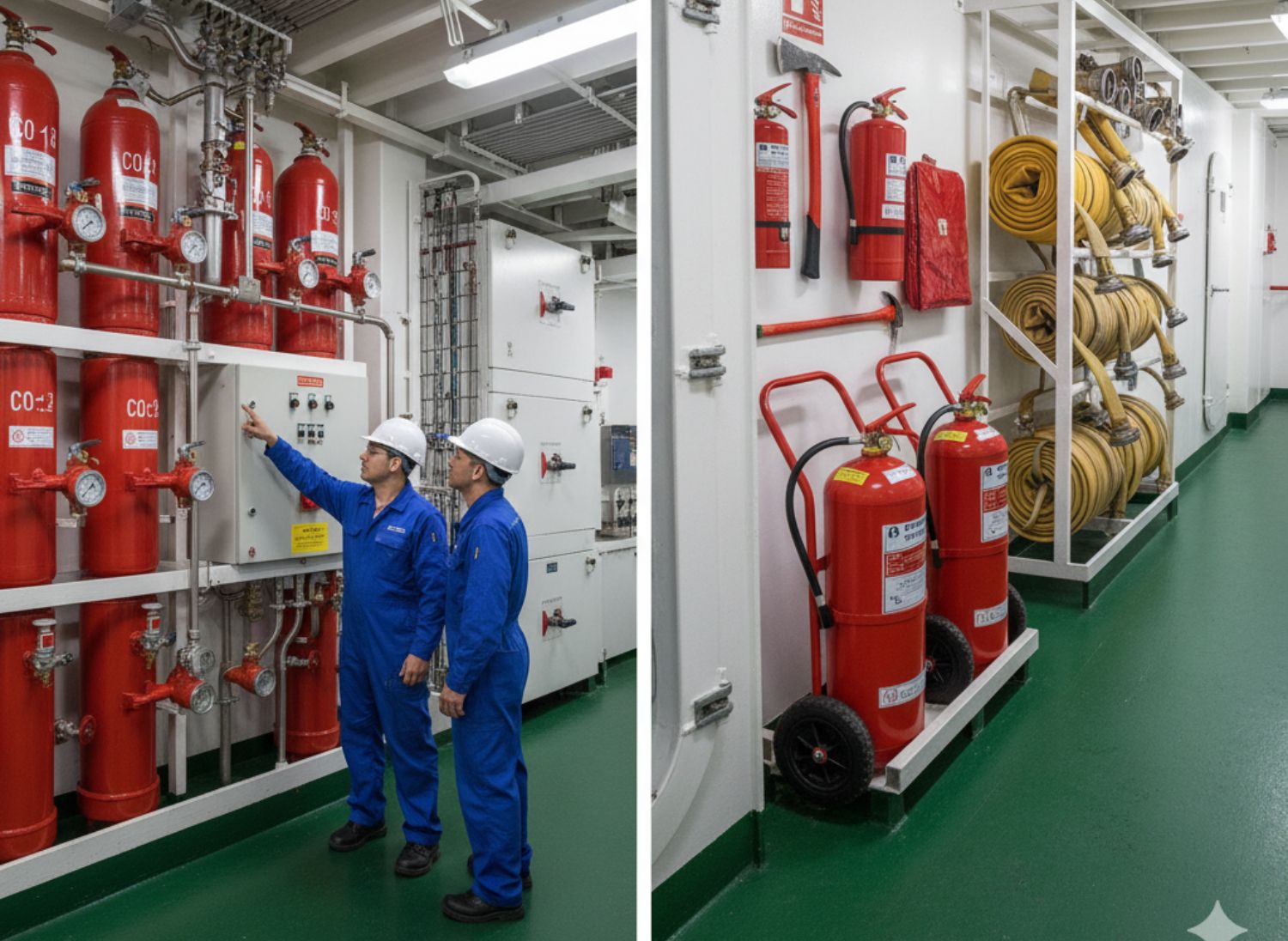
  • Safety Equipment Certification: Testing and certification of lifeboats, davits, and firefighting equipment

How to Choose the Best Ship Repair in Dubai: Essential Selection Criteria

Selecting the right repair facility can make the difference between a smooth, cost-effective repair and a problematic, budget-busting experience. Here are the critical factors to evaluate:

1. Certification and Compliance Standards

Verify that the repair facility holds necessary certifications and approvals:

  • ISO 9001 Quality Management certification
  • Classification society approvals (Lloyd’s Register, DNV, ABS, Bureau Veritas, etc.)
  • OHSAS 18001 or ISO 45001 for occupational health and safety
  • ISO 14001 for environmental management

2. Technical Capabilities and Infrastructure

Assess whether the facility can handle your vessel’s specific requirements:

  • Dry dock dimensions and lifting capacity
  • Availability of specialized equipment (cranes, welding machines, testing equipment)
  • In-house engineering and design capabilities
  • Access to OEM parts and genuine spares

3. Experience with Your Vessel Type

Different vessel categories require specialized knowledge:

  • Bulk carriers have different needs than container ships
  • Tankers require certified gas-free procedures and hot work permits
  • Passenger vessels demand stringent safety and comfort standards
  • Offshore support vessels need specialized dynamic positioning system expertise

4. Turnaround Time and Project Management

Time is money in shipping operations:

  • Request detailed project timelines with realistic completion dates
  • Evaluate the facility’s track record for meeting deadlines
  • Ensure clear communication channels and regular progress updates
  • Assess their ability to handle urgent repairs and emergency situations

5. Cost Transparency and Value

Competitive pricing shouldn’t compromise quality:

  • Request detailed quotations with itemized costs
  • Compare like-for-like services across multiple providers
  • Consider total cost of ownership, not just initial repair costs
  • Evaluate warranty terms and post-repair support

The arc ship management and chartering Advantage: Excellence in Ship Repair UAE

At arc ship management and chartering, we’ve built our reputation on delivering exceptional marine repair services Dubai that exceed industry standards. Our commitment to quality, safety, and customer satisfaction sets us apart in the competitive UAE maritime services sector.

Our Comprehensive Service Portfolio

We offer end-to-end solutions for vessel maintenance and repair:

Planned Maintenance Programs: Proactive maintenance schedules that prevent costly breakdowns and extend asset life

Emergency Repair Services: Rapid response teams available 24/7 for critical repairs and damage control

Dry Docking Services: Full-service dry dock management from planning through execution and delivery

Conversion and Retrofit Projects: Modification services including scrubber installations, ballast water treatment systems, and energy-efficiency upgrades

Survey Support: Coordination with classification societies, flag state, and port state inspectors

Why Leading Ship Owners Trust arc ship management and chartering

Proven Track Record: Decades of combined experience serving international ship owners, operators, and charterers

Technical Excellence: Team of certified marine engineers, naval architects, and skilled craftsmen

Quality Assurance: Rigorous quality control processes at every stage of repair work

Competitive Pricing: Transparent quotations and cost-effective solutions without compromising quality

Client-Centric Approach: Dedicated project managers ensuring your specific needs are met and expectations exceeded

Strategic Partnerships: Established relationships with leading equipment manufacturers and classification societies

Ship Repair Process: What to Expect When Choosing Dubai Facilities

Understanding the typical ship repair workflow helps you plan effectively and minimize operational disruption.

Phase 1: Pre-Arrival Planning (2-4 Weeks Before)

  • Scope Definition: Detailed discussion of required repairs, maintenance items, and vessel condition
  • Quotation Development: Comprehensive cost estimates including materials, labor, and port charges
  • Slot Booking: Securing dry dock or berth availability
  • Procurement: Ordering long-lead items, spare parts, and specialized materials
  • Regulatory Coordination: Arranging surveys, inspections, and certifications

Phase 2: Arrival and Initial Assessment (Days 1-2)

  • Vessel Berthing: Securing the vessel safely at the designated berth or entering dry dock
  • Damage Survey: Detailed inspection to identify additional repairs beyond initial scope
  • Safety Procedures: Implementing hot work permits, confined space procedures, and safety protocols
  • Scope Finalization: Agreement on any additional work items discovered during initial inspection

Phase 3: Repair Execution (Variable Duration)

  • Hull Work: Cleaning, coating removal, steel repairs, and painting operations
  • Machinery Overhauls: Engine room repairs, propulsion system maintenance
  • Systems Testing: Electrical, navigation, and automation system repairs and testing
  • Quality Inspections: Regular quality control checks throughout the repair process

Phase 4: Testing and Delivery (Final 2-3 Days)

  • Sea Trials: Comprehensive testing of all repaired systems under operational conditions
  • Classification Surveys: Final inspections by classification society surveyors
  • Documentation: Completion of all repair reports, certificates, and warranty documentation
  • Handover: Final walkthrough and vessel delivery to owner/operator

Cost Considerations: Budgeting for Ship Repair in Dubai

Understanding the cost structure helps you budget effectively for ship repair projects. While prices vary based on vessel size, repair complexity, and materials required, here are typical cost factors:

Fixed Costs

  • Dry dock rental or berth fees (daily rates)
  • Classification society survey fees
  • Project management and supervision charges
  • Equipment rental (scaffolding, cranes, compressors)

Variable Costs

  • Labor hours (skilled tradesmen, engineers, technicians)
  • Materials and spare parts (steel plates, paints, consumables)
  • Subcontractor services (specialized repairs, testing services)
  • Overtime and weekend work premiums

Cost-Saving Strategies

Plan Ahead: Early booking secures better rates and ensures facility availability

Bundle Services: Combining multiple maintenance items in a single docking reduces overall costs

Flexible Scheduling: Off-peak season repairs may offer better pricing

Long-term Partnerships: Establishing relationships with trusted repair providers often yields preferential pricing

Accurate Scope Definition: Detailed pre-repair surveys minimize unexpected additional work

Environmental Compliance in Marine Repair Services Dubai

Dubai’s ship repair industry operates under stringent environmental regulations that protect the Arabian Gulf’s delicate marine ecosystem. Reputable facilities implement comprehensive environmental management systems.

Key Environmental Considerations

Waste Management: Proper collection, segregation, and disposal of hazardous materials including oils, solvents, and contaminated materials

Emission Controls: Managing VOC emissions from painting operations and exhaust gases from machinery testing

Water Pollution Prevention: Containment systems preventing paint particles, oils, and chemicals from entering harbor waters

Recycling Programs: Responsible disposal and recycling of scrap metal, packaging materials, and decommissioned equipment

Green Technologies: Adoption of eco-friendly paints, water-based coatings, and energy-efficient equipment

At arc ship management and chartering, we prioritize environmental responsibility in all repair operations, ensuring compliance with both UAE regulations and international environmental standards including MARPOL.

Future Trends in Ship Repair UAE: What’s Next?

The maritime repair industry is evolving rapidly, driven by technological advancement, regulatory changes, and sustainability imperatives. Understanding these trends helps you make forward-thinking decisions.

Digitalization and Smart Repairs

  • Predictive Maintenance: IoT sensors and data analytics identifying potential failures before they occur
  • Digital Twins: Virtual vessel models enabling simulation and optimization of repair procedures
  • Remote Diagnostics: Shore-based experts supporting onboard teams through augmented reality and video conferencing
  • Blockchain Documentation: Secure, immutable records of all maintenance and repair work

Sustainability Initiatives

  • Energy Efficiency Retrofits: Installation of wind-assisted propulsion, air lubrication systems, and energy-saving devices
  • Alternative Fuel Conversions: Preparing vessels for LNG, methanol, and hydrogen propulsion systems
  • Emission Reduction Systems: Scrubber installations and selective catalytic reduction systems
  • Circular Economy Practices: Maximizing component reuse and recycling in ship repair operations

Regulatory Evolution

  • Stricter Emission Standards: IMO 2030 and 2050 targets driving need for vessel modifications
  • Cybersecurity Requirements: New regulations addressing vessel cyber vulnerabilities
  • Enhanced Safety Standards: Continuous improvement in crew safety and accident prevention measures

Taking Action: Your Next Steps to Secure the Best Ship Repair in Dubai

Now that you understand what makes Dubai exceptional for ship repair services and how to select the right provider, it’s time to take action to protect your maritime assets.

Immediate Action Items:

  1. Assess Your Vessel’s Needs: Conduct a thorough review of upcoming maintenance requirements, overdue surveys, and repair priorities

  2. Request Detailed Quotations: Contact arc ship management and chartering and other reputable providers for comprehensive proposals

  3. Compare Capabilities: Evaluate facilities based on certifications, experience with your vessel type, and technical capabilities

  4. Plan Your Schedule: Work backward from critical operational deadlines to identify optimal repair windows

  5. Engage Early: Initiate discussions with potential repair providers 6-8 weeks before required docking dates

Why Choose arc ship management and chartering Today

When you partner with arc ship management and chartering for your ship repair UAE needs, you’re choosing:

  • Uncompromising Quality: Every repair meets or exceeds industry standards and classification requirements
  • Transparent Communication: Regular updates throughout the repair process with dedicated project management
  • Cost-Effective Solutions: Competitive pricing without hidden charges or unexpected cost overruns
  • Safety Excellence: Zero-accident culture with comprehensive safety management systems
  • Proven Results: Satisfied clients across container shipping, tanker operations, bulk carriers, and offshore sectors

Conclusion: Excellence in Marine Repair Services Dubai Starts Here

Choosing the best ship repair in Dubai is a critical decision that impacts your vessel’s performance, safety compliance, regulatory standing, and profitability. Dubai’s position as a global maritime hub, combined with world-class facilities and expertise, makes it an ideal location for all your vessel maintenance and repair needs.

Whether you require routine dry docking, emergency repairs, major conversions, or comprehensive overhauls, the quality of service you receive will directly influence your operational success. By partnering with a trusted, experienced provider like arc ship management and chartering, you ensure that your vessel receives the expert care it deserves while minimizing downtime and controlling costs.

Don’t leave your vessel’s condition to chance. Contact arc ship management and chartering today to discuss your specific ship repair requirements. Our team of maritime professionals is ready to provide tailored solutions that meet your operational needs, budget constraints, and timeline requirements.

Ready to experience the best ship repair in Dubai? Reach out to arc ship management and chartering for a no-obligation consultation and detailed quotation. Your vessel deserves nothing less than excellence and that’s exactly what we deliver.

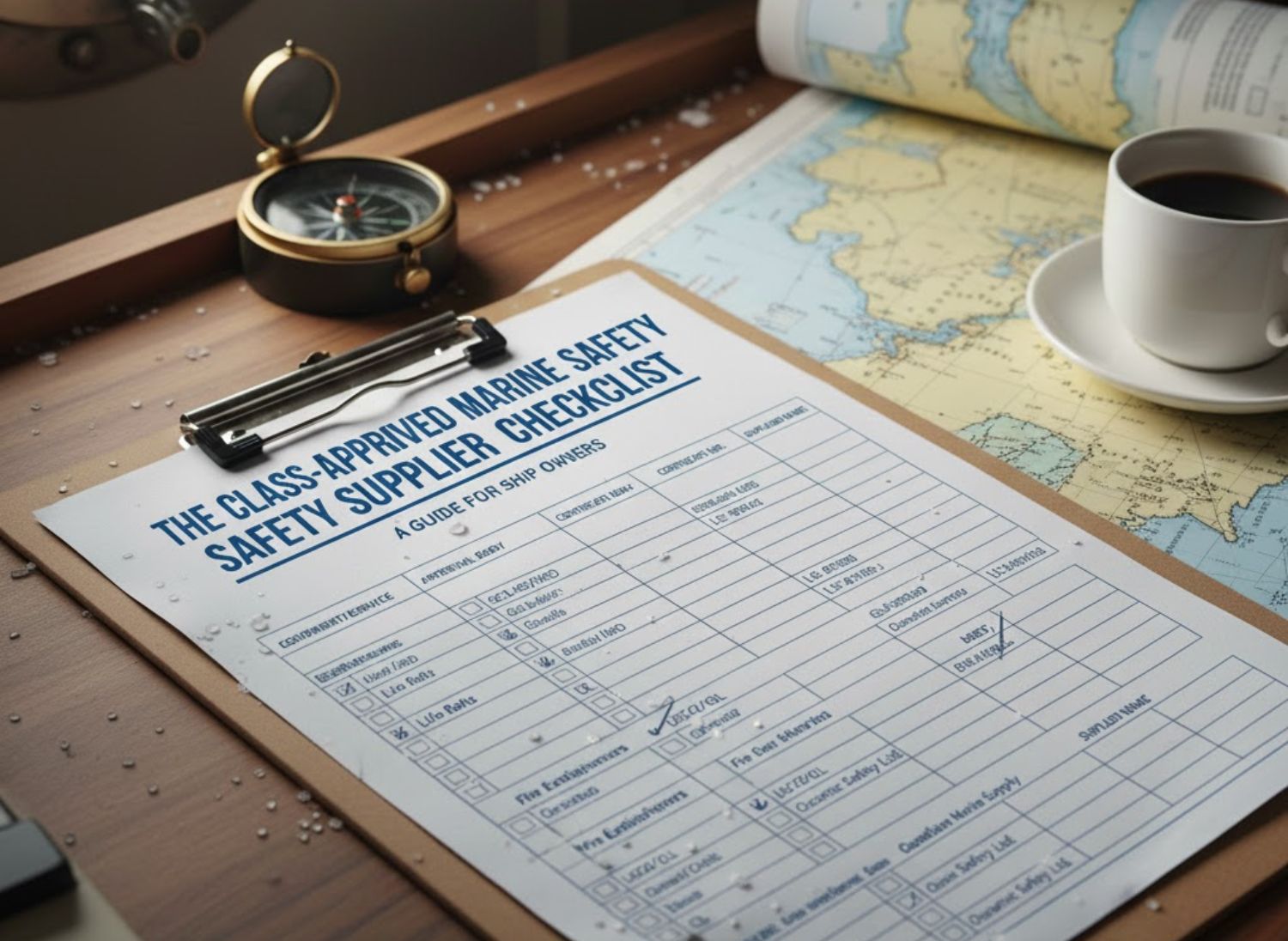
The Class-Approved Marine Safety Supplier Checklist: A Guide for Ship Owners

Introduction

As a ship owner operating in the dynamic maritime hub of Dubai and the UAE, staying ahead in safety and regulatory compliance is essential. At Arc Ship, we understand the rigorous demands you face when maintaining your fleet. Whether for offshore vessels or commercial shipping, choosing a class-approved marine safety supplier can be the difference between smooth operations and potential detentions or safety incidents. This guide walks you through the key criteria, checklist items, and steps to select a supplier that not only meets standards but adds real value to your operation.

 Why Class Approval & Marine Safety Matter

In the maritime sector, “class approval” refers to recognition by classification societies and flag-state authorities for equipment and suppliers used on vessels. It means the supplier or the safety equipment they provide has been assessed and meets specific standards for reliability, manufacture, and service.
For ship owners in Dubai and across the UAE, working with a class-approved supplier means fewer surprises during inspections, stronger documentation for port state control visits, and reduced risk of non-compliance fines. Choosing the right supplier is not just about ticking a box it’s about protecting your vessel, crew, and reputation.

 Key Criteria to Evaluate in a Supplier

1. Certification and Class Approval Status

When evaluating a marine safety supplier, start by verifying their approvals. Ask whether they are recognised by major classification societies and whether their certification is up to date. Check the scope of what the approval covers, the expiry date, and whether it extends to the specific equipment you need. Utilising non-approved suppliers can expose your vessel to detention risk, invalidated insurance claims, and operational downtime.

2. Product Range & Quality Assurance

A reliable supplier will offer a comprehensive range of class-approved safety equipment.. lifejackets, liferafts, firefighting gear, personal protective equipment (PPE), and more. Beyond range, ask to see manufacturing specifications, quality control procedures, test certificates, and traceability records. This ensures you are getting equipment that meets your vessel’s class, flag-state and operational requirements.

3. Compliance with Local / Regional Requirements

Dubai and the UAE have their own port state controls, flag-state regulations, and operational procedures. Make sure the supplier not only understands the global standards but is well-versed in the regional landscape. They should be able to provide documentation tailored to inspections at ports such as Port Rashid and respond quickly to local service requirements. Regional experience matters.

 4. Service, Maintenance & Support Capability

Safety equipment isn’t a one-time purchase it requires ongoing inspection, servicing, certification renewal, and sometimes emergency replacement. Choose a supplier who offers local presence in Dubai/UAE or rapid response service networks. This ensures downtime is minimised and your crew’s safety is maintained.

5. Vendor Reputation, References & Transparency

 Any supplier worth their salt will provide references and case studies from ship owners especially in the UAE region. Ask for testimonials, check their track record, review how they handle documentation, warranty claims, pricing transparency, and service contracts. Good vendors are open about lead-times, spare-parts availability, and supply-chain reliability.

 6. Cost vs Value – Hidden Risks of Cutting Corners

While cost is always a factor, focusing solely on price can be a false economy. Cheap or non-approved equipment may trigger detentions, invalidate warranties or insurance, increase repair costs and create unsafe conditions. Conversely, investing in a trusted, class-approved supplier can save money in the long term through fewer interruptions, better compliance and peace of mind.

 Step-by-Step Ship Owner’s Selection Checklist

 Here’s a practical tick-list you can use when selecting your marine safety supplier:

  • Supplier holds valid class or flag-state approval.
  • Equipment list aligns with your vessel class and flag requirements.
  • Manufacturing QA/test certificates are provided and verified.
  • Supplier has local presence or support network in Dubai/UAE.
  • Transparent pricing, warranty and spare-parts terms are clearly documented.
  • References and past performance from regional ship owners.
  • Documentation ready for port state control or flag-inspection at your ports of call.
  • Ongoing service, inspection and maintenance programmes offered.
  • Compliance with the latest international maritime safety standards.

Lead times and supply-chain reliability confirmed, especially for replacements or urgent delivery.

How Arc Ship Supports Ship Owners in Dubai

At Arc Ship, we specialise in helping ship owners across Dubai and the UAE navigate the complex world of marine safety equipment. We partner with class-approved manufacturers and suppliers, offering you trusted solutions that meet both global and regional standards.
When you engage with us, you gain access to:

  • A curated selection of class-approved safety equipment aligned with your vessel’s requirements.
  • Local support and servicing tailored for the UAE maritime market.
  • Documentation and audit assistance to satisfy port state control inspections and classification society reviews.

Transparent pricing and efficient delivery across Dubai, Abu Dhabi and the wider Gulf region.
Visit our service page for full details: Marine Safety Equipment – Dubai

FAQs on Working with a Class-Approved Marine Safety Supplier

 Q1: What if my equipment is already installed but the supplier is not class-approved?
If the equipment on board is from a non-approved supplier, you face increased risk of detention or insurance challenges. It’s wise to review replacement options or retrofit service agreements with class-approved vendors.

Q2: How often should I review my safety supplier and equipment?
Review at least annually or before major inspections. Also review after a port call or classification society visit where non-compliance issues were flagged.

Q3: Can I switch suppliers mid-term and what are the implications?
Yes , but you should ensure the new supplier’s equipment and service history integrate smoothly. Review compatibility, certificates, change-over costs and lead times.

Q4: What documentation should I keep on board and in the office?
Keep spare certificates, spare part lists, service reports, maintenance logs, supplier warranties and equipment breakdown history. These support compliance during inspections.

Q5: How does this affect port state control inspections in Dubai/UAE?
Using a class-approved supplier with full documentation improves your readiness. Inspectors often check equipment certification, service status, supplier credentials and documentation. Being well-prepared reduces risk of delays or detentions.

Conclusion

For ship owners in Dubai and across the UAE, the stakes are high: safety, compliance and reputation all hinge on working with the right marine safety supplier. By using this checklist and partnering with a trusted class-approved vendor like Arc Ship, you give your vessel the best chance of smooth operations, audit-ready documentation and peace of mind. Take action today, review your supplier, tick off the checklist, and make sure your next safety-equipment decision is the right one.

Ultimate Guide to SLPA Approved Safety Services in Sri Lanka

Ultimate Guide to SLPA Approved Safety Services in Sri Lanka

Sri Lanka, strategically positioned in the Indian Ocean, plays a pivotal role in global maritime trade. At the heart of its port operations stands the Sri Lanka Ports Authority (SLPA)  the central body responsible for maintaining operational efficiency, safety, and compliance across the nation’s ports.

SLPA’s oversight ensures that every vessel docking or operating within Sri Lankan waters adheres to stringent international safety regulations. This includes ensuring that port equipment, fire safety systems, and life-saving appliances (LSA) are inspected, tested, and certified by SLPA-approved safety service providers.

What is the Sri Lanka Ports Authority (SLPA)?

Established under the Sri Lanka Ports Authority Act No. 51 of 1979, SLPA governs all major ports in the country  including Colombo, Galle, Trincomalee, and Hambantota. It supervises not only port operations but also safety compliance in alignment with international maritime frameworks such as the International Maritime Organization (IMO) and the SOLAS Convention.

Why Safety Services Are Crucial in Sri Lankan Ports

Maritime operations inherently involve risks  fire outbreaks, oil spills, or mechanical failures. Hence, SLPA-approved safety services act as a safeguard to minimize these hazards, ensuring the protection of life, cargo, and the marine ecosystem.

Ports like Colombo handle thousands of ship movements annually. Without approved safety checks and certified systems, even a minor failure could result in catastrophic losses. That’s why SLPA approval is not merely a bureaucratic step  it’s a vital assurance of reliability.

Understanding SLPA Approved Safety Standards

Overview of Safety Certification and Approval Process

To receive SLPA approval, safety service providers must undergo a rigorous evaluation that includes equipment inspection, personnel qualification verification, and compliance with ISO and IMO standards.

Only after meeting all criteria does SLPA issue an official certification, allowing the company to provide services within Sri Lankan ports.

SLPA Compliance with International Maritime Organization (IMO) Standards

The SLPA ensures that all its safety procedures align with IMO conventions, particularly the SOLAS (Safety of Life at Sea) requirements. This includes maintaining updated fire safety systems, lifeboats, and emergency communication tools.

Importance of SLPA Authorization for Safety Service Providers

Working with SLPA-approved providers guarantees legal compliance and high-quality service. Non-approved operators can face penalties, revocation of port access, or suspension of business activities.

Key SLPA Approved Safety Services Available in Sri Lanka

Fire Safety Equipment Inspection and Maintenance

Fire prevention and control are top priorities in maritime operations. SLPA-approved companies provide regular inspections, hydrostatic testing of fire extinguishers, and servicing of fixed fire suppression systems.

Life-Saving Appliances (LSA) Testing and Certification

LSAs, including life rafts, jackets, and rescue boats, must be periodically inspected and certified. SLPA-authorized companies ensure that all LSA equipment complies with SOLAS and IMO regulations.

Marine Communication and Navigation Equipment Calibration

Navigation and communication systems such as radar, GPS, and VHF radios are calibrated and tested to maintain accuracy and reliability.

Environmental Safety and Pollution Control Services

To mitigate marine pollution, SLPA-approved providers also handle oil spill containment, waste management, and environmental monitoring within port zones.

Steps to Get SLPA Approval for Safety Companies

Eligibility Criteria for Service Providers

To apply, companies must:

  • Be registered under Sri Lankan law
  • Have qualified technical staff
  • Possess ISO 9001 or equivalent quality management certification

Required Documentation and Application Procedure

Applicants submit a detailed proposal including:

  • Company registration documents
  • Equipment lists and calibration certificates
  • Staff qualifications and training records

SLPA Inspection and Evaluation Process

After document verification, SLPA conducts on-site inspections and technical evaluations. Successful applicants receive SLPA Authorization Certificates, valid for one year and renewable upon compliance verification.

Benefits of Choosing SLPA Approved Safety Services

  • ✅ Compliance with IMO and SOLAS regulations
  • ✅ Enhanced crew and cargo safety
  • ✅ Reliable and periodically audited services
  • ✅ Reduced insurance and operational risks

Common Challenges Faced by Safety Service Providers

  • Keeping pace with rapidly changing maritime technology
  • Ensuring consistent equipment calibration standards
  • Managing documentation and re-approval cycles efficiently

FAQs about SLPA Approved Safety Services

Q1: What does “SLPA approved” mean?
It means the service provider has been officially verified and certified by the Sri Lanka Ports Authority to perform safety-related services in Sri Lankan ports.

Q2: How often must SLPA approval be renewed?
Typically every year, depending on compliance audits and performance reviews.

Q3: Can foreign companies get SLPA approval?
Yes, provided they register locally and meet all technical and regulatory requirements.

Q4: Are SLPA-approved services mandatory for all ships?
Yes, vessels operating under Sri Lankan jurisdiction must engage SLPA-approved providers for safety checks.

Q5: How can I verify if a company is SLPA approved?
You can cross-check the provider’s certification number on the official SLPA website or request documentation directly from the company.

Q6: What happens if a non-approved provider offers services?
Such providers can face fines, suspension, or permanent disqualification from operating within SLPA ports.

Conclusion – Strengthening Maritime Safety through SLPA Standards

The SLPA Approved Safety Services in Sri Lanka represent the backbone of the nation’s maritime reliability and global reputation. By adhering to international safety protocols and promoting certified service providers, Sri Lanka continues to strengthen its position as a trusted maritime hub in South Asia.

Whether you’re a ship owner, operator, or safety company, aligning with SLPA-approved standards is the surest way to ensure long-term safety, compliance, and excellence in the maritime industry

Anchored in Excellence: How Arc Ship Supports Shipowners Across UAE, Oman, India, Sri Lanka & Beyond

Introduction

In today’s fast-paced maritime world, shipowners need more than just service providers  they ned partners who understand their vessels, challenges, and operational realities.
From the busy ports of Dubai and Fujairah to the expanding harbors of Muscat and Kochi, Arc Ship has become a trusted name in providing reliable, responsive, and compliant marine solutions across the region.

Our mission is simple: to keep vessels safe, compliant, and operational – wherever they sail.

Serving the Heart of Maritime Trade

The UAE, Oman, and India represent some of the most active maritime corridors in the world – connecting Asia, Africa, and Europe. Shipowners operating here face unique challenges:
  • Rapid turnaround demands at ports
  • Harsh weather and operational environments
  • Varied compliance regulations
  • Need for trusted local partners
Arc Ship bridges this gap by providing end-to-end ship maintenance, safety, and management solutions, ensuring every vessel meets both operational and international safety standards.

Our Core Marine Services

At Arc Ship, we deliver a comprehensive range of services designed for reliability, efficiency, and compliance – all backed by expert marine engineers and certified technicians. Common issues include:
    • Ship Maintenance & Repair: From hydraulic systems and electrical controls to deck machinery and safety equipment, our technicians handle all types of onboard repairs. We focus on preventive maintenance to reduce downtime and keep your operations steady.
    • Life-Saving Appliance (LSA) & Fire-Fighting Equipment (FFE) Servicing: Arc Ship ensures that your LSA and FFE systems meet IMO and SOLAS standards. We provide inspections, testing, and certification services through approved facilities — ensuring your crew’s safety and vessel compliance.
    • Load Testing & Equipment Certification: Our load testing services validate the strength and reliability of cranes, davits, winches, and lifting gear, with certified results recognized by class societies and surveyors.
    • Safety Supplies & Provisions:</B We supply IMO-approved emergency drinking water, food rations, lifeboat equipment, and distress materials to keep your ship fully prepared for emergencies.Compliance & Documentation Support: Arc Ship assists shipowners with safety audits, class renewals, and documentation — simplifying the complex regulatory processes that come with international operations.

Regional Expertise: Local Strength with Global Reach

Arc Ship’s presence across UAE, Oman, and India is built on a strong local network and a globally recognized service standard.
  • In the UAE: Serving major ports including Dubai, Fujairah, and Ras Al Khaimah, Arc Ship provides 24/7 response teams and emergency call-out services for vessel repairs and inspections.
  • In Oman: Supporting operations at Muscat, Sohar, and Salalah, we offer reliable inspection and load testing support for vessels operating under challenging Gulf conditions.
  • In India: With a service footprint across Kochi, Mumbai, and Chennai, our technical teams handle ship safety inspections, LSA servicing, and component replacements in line with class standards.
Wherever your vessel docks, Arc Ship ensures continuity of service, documentation, and safety compliance — minimizing disruption and maximizing performance.

A Partnership Owners Can Trust

Our value lies not only in what we do, but in how we do it. Shipowners across the region choose Arc Ship for our:
  • Certified Expertise: Approved by major classification societies and flag administrations.
  • Transparency: Clear reporting and documentation after every service.
  • Reliability: Round-the-clock service readiness across multiple ports.
  • Commitment: Every job is treated as a partnership, not a contract.
Our long-standing relationships with ship operators, managers, and marine agencies stand as proof of the trust Arc Ship has earned through consistent performance.

Beyond Borders: Expanding Our Service Horizon

While our foundation is strong in the UAE, Oman, and India, Arc Ship continues to extend its reach into new regions across the Middle East, Africa, and Southeast Asia. With growing collaborations, expanded service hubs, and class-recognized facilities, we aim to bring our proven expertise to more shipowners worldwide — ensuring safety and reliability across every voyage.

Conclusion

In an industry where time, safety, and trust define success, Arc Ship stands as a dependable partner for shipowners across the UAE, Oman, India, and beyond. We combine local presence with international standards, ensuring your vessel is always safe, compliant, and ready for the next journey.Because at Arc Ship, we don’t just maintain ships — we protect operations, safeguard lives, and support your voyage from port to port

Safety Beyond the Storm: IMO-Approved Emergency Food & Water Standards for Ships

Introduction

When a vessel faces an emergency at sea, survival depends on more than machinery or communication systems — it depends on basic human essentials: clean drinking water and safe food.
Under harsh marine conditions, where rescue can take days, the International Maritime Organization (IMO) mandates strict standards for emergency drinking water and food rations to ensure the survival of every crew member on board.

At Arc Ship, we believe safety goes beyond engineering — it’s also about preparedness. This guide explores what IMO requires, how supplies are maintained, and why compliance is critical for every responsible shipowner.

Understanding the IMO’s Life-Saving Standards

The IMO’s SOLAS (Safety of Life at Sea) convention establishes clear guidelines for emergency provisions. These standards ensure that even in extreme survival situations, each person on board has access to safe, durable, and sufficient supplies.According to IMO Resolution MSC.218(82) and LSA Code Chapter IV, every vessel must carry:
  • Emergency drinking water (minimum 1.5 liters per person)
  • Emergency food rations (minimum 10,000 kJ or 2,400 kcal per person)
  • Supplies stored in lifeboats and liferafts, protected from seawater, sunlight, and temperature variations
These requirements are not optional — they are critical parts of a vessel’s Life-Saving Appliances (LSA) equipment.

Emergency Drinking Water – Lifeline in Survival Situations

Water is the most vital survival need, yet one of the most difficult to preserve at sea. IMO-approved emergency drinking water must meet specific conditions:
  • Non-carbonated, bacteriologically safe, and sealed in durable containers
  • Shelf life: Minimum five years under marine conditions
  • Resistant to temperature and humidity changes
  • Packed in 500 ml or smaller portions for easy distribution
At Arc Ship, we supply and maintain IMO-compliant water rations that undergo strict testing to ensure purity and long-term storage stability. We also help vessel operators track expiry dates and restock in line with flag-state inspection schedules.

Emergency Food Rations – Compact Energy When It Matters Most

In a survival situation, food isn’t just fuel — it’s endurance. IMO-compliant emergency food rations are designed to provide balanced energy, minimal thirst stimulation, and long shelf life.Key IMO requirements include:
  • High-calorie, non-thirst provoking formulations
  • Nutritionally stable for 5 years under marine conditions
  • Individually sealed and portioned for controlled use
  • Tested for contamination and compliance with ISO 18813:2006
Arc Ship partners with certified marine supply manufacturers to provide emergency rations that meet these exacting standards. Each batch is documented, traceable, and approved for onboard inspections.

Why Compliance with IMO Standards Matters

Carrying substandard or expired emergency provisions is a serious safety and compliance risk. During port state or class inspections, emergency rations are routinely checked for expiry, packaging integrity, and labeling.Non-compliance can result in:
  • Detention or fines during inspections
  • Invalidation of vessel safety certificates
  • Severe risk to crew welfare during real emergencies
At Arc Ship, we help shipowners avoid these issues through timely replenishment, compliance documentation, and record maintenance — ensuring you’re always inspection-ready.

Arc Ship’s Role in Life-Saving Preparedness

Arc Ship goes beyond supply. We provide end-to-end management of emergency life-saving provisions, including:
  • Periodic inspection and inventory management
  • Replacement of expired or damaged rations
  • Coordination with class surveyors and auditors
  • Supply of certified IMO-compliant products
Our goal is simple – to make sure your vessel never leaves port without being fully prepared for any survival scenario.

Conclusion

In an emergency at sea, every drop and every calorie matters. Compliance with IMO standards isn’t paperwork — it’s protection for your crew and vessel.At Arc Ship, we combine expertise, reliability, and certified supplies to ensure your emergency drinking water and food rations meet every international safety requirement. Because when safety is at stake, preparedness is your strongest defense.

Tested for Trust: How Load Testing Strengthens Marine Equipment Reliability

Introduction

Every piece of equipment on board a ship – from cranes and winches to lifeboat davits – carries a responsibility far beyond its mechanical function. It carries lives, operations, and safety itself.
In marine environments, where precision and reliability define survival, load testing is the process that proves equipment is not only functional, but trustworthy.

At Arc Ship, we believe that effective safety isn’t about waiting for compliance checks – it’s about consistently testing, validating, and maintaining the equipment that keeps your crew safe and your operations running smoothly.

Understanding Load Testing in Marine Safety

Load testing is the controlled application of weight or force to verify that marine equipment can safely perform under real-world conditions. It helps assess the strength, stability, and reliability of critical systems such as:
  • Lifting equipment (cranes, derricks, winches)
  • Lifeboat release and recovery systems
  • Gangways, davits, and lifting appliances
  • Cargo handling gear and mooring winches
This testing ensures compliance with international safety regulations, including SOLAS, IMO, and classification society requirements such as DNV, Lloyd’s Register, or ABS. But beyond compliance, it’s about peace of mind — knowing that when it matters most, your equipment won’t fail.

Why Load Testing Matters

Shipboard equipment operates under constant stress: salt exposure, humidity, mechanical wear, and heavy loads. Without testing, unseen fatigue or corrosion can develop — leading to catastrophic failures.Regular load testing helps:
  • Detect weaknesses before they become failures
  • Verify the performance of newly installed or repaired equipment
  • Ensure all machinery meets certified capacity ratings
  • Maintain insurance and class compliance
  • Build confidence among crew and management
At sea, prevention is the best form of protection — and load testing is the foundation of that safety culture.

How Arc Ship Conducts Reliable Load Testing

At Arc Ship, load testing is performed using certified equipment, calibrated weights, and simulation tools that replicate real operating conditions. Our process combines engineering precision with hands-on marine experience, ensuring every test is accurate, compliant, and safely executed.Our load testing approach includes:
  • Pre-Test Inspection – Evaluating equipment integrity and identifying visible defects.
  • Test Setup & Calibration – Ensuring test loads and instruments are verified and safe.
  • Controlled Load Application – Applying progressive loads under supervision.
  • Data Recording & Analysis – Monitoring stress points and system behavior.
  • Detailed Reporting & Certification – Providing class-approved documentation and recommendations.
We work closely with vessel owners, operators, and classification surveyors to ensure that every load test meets international standards — and exceeds safety expectations.

Ensuring Equipment Reliability: Beyond One-Time Tests

True reliability doesn’t come from a single test — it’s built over consistent inspection, maintenance, and documentation. That’s why Arc Ship integrates load testing into broader maintenance and safety programs, offering periodic assessments to ensure your equipment performs optimally throughout its service life.We also help shipowners establish preventive maintenance schedules that include:
  • Annual or voyage-based load checks
  • Visual inspections and non-destructive testing (NDT)
  • Post-repair performance verification
  • Safety drills and crew training support
This holistic approach ensures that every component remains ready — whether during cargo operations or emergencies.

Arc Ship’s Commitment to Safety and Compliance

With years of marine engineering experience, Arc Ship is committed to upholding the highest standards of safety, transparency, and reliability. Our certified technicians and engineers perform tests with precision, ensuring every vessel meets its class and flag requirements.Every report we issue is backed by data, engineering judgment, and accountability — giving our clients confidence that their ship equipment is ready to perform safely under real-world pressures.

Conclusion

Load testing isn’t just a compliance exercise — it’s a commitment to safety, reliability, and trust at sea. When done right, it prevents failures, extends equipment life, and ensures every voyage is backed by proven strength.At Arc Ship, we don’t just test — we ensure your equipment is tested for trust. Because when lives and operations depend on performance, there’s no room for uncertainty.Outbound Reference: For international marine safety standards, visit IMO – Safety of Life at Sea (SOLAS).

Ensuring Ship Safety: Expert Hydraulic and Electrical Repair Solutions by ArcShip

Introduction

In the demanding world of marine operations, a ship’s safety systems are its lifeline. These systems protect the vessel, crew, and cargo during critical situations – from steering control and emergency power to firefighting and alarm mechanisms.
Over time, continuous exposure to saltwater, vibration, and pressure causes wear and tear – particularly in hydraulic and electrical components. Maintaining and repairing these systems isn’t just about compliance; it’s about ensuring safety at sea.
At Arc Ship, we understand how essential these systems are for uninterrupted and secure operations.

Understanding Ship Safety Systems

Modern ships rely on a combination of hydraulic and electrical systems to keep safety operations running smoothly. These include:
  • Steering gear systems
  • Fire suppression and control systems
  • Stabilizers and deck machinery
  • Emergency alarms and power backups
Every system must comply with international standards such as SOLAS (Safety of Life at Sea) and class society requirements. Even a small failure in a safety circuit or hydraulic line can lead to major operational risks. That’s why routine inspection and timely repair are non-negotiable for responsible ship management.

Hydraulic Systems: The Power Behind Precision

Hydraulic systems provide the muscle that drives precision and power on board. From operating cranes and winches to steering mechanisms and hatch covers, hydraulics handle high-pressure, high-load operations that demand reliability.Common issues include:
  • Leakage due to worn seals or hoses
  • Contaminated hydraulic fluid causing system inefficiency
  • Faulty valves and pressure regulators
  • Cylinder wear leading to uneven motion
Ignoring these symptoms can lead to unsafe conditions and unscheduled downtime. At Arc Ship, our engineers specialize in diagnosing faults, overhauling hydraulic pumps and actuators, replacing seals, and flushing systems to restore full efficiency — ensuring that shipboard machinery performs flawlessly under pressure.

Electrical Systems: The Nerve Center of Safety

If hydraulics are the muscle, the electrical network is the nervous system of a vessel. Electrical systems power essential operations such as navigation lights, fire alarms, power distribution panels, and emergency shutdown mechanisms.Common repair requirements include:
  • Faulty circuit breakers or wiring corrosion
  • Sensor malfunctions and short circuits
  • Battery and power backup failures
  • Overheating of control panels or switchboards
Our certified marine electricians at Arc Ship use advanced testing tools to trace electrical faults and restore systems quickly. Every repair follows strict safety and compliance protocols — ensuring reliability even in the toughest sea conditions.

How Arc Ship Ensures Reliable Repairs

At Arc Ship, we combine hands-on experience with deep technical expertise. Our team of marine engineers and technicians:
  • Provides onboard troubleshooting and repair worldwide
  • Uses genuine spare parts and certified testing equipment
  • Ensures full compliance with class and flag requirements
  • Prioritizes quick turnaround to minimize vessel downtime
We believe in doing the job right the first time — so that every repair enhances both safety and operational longevity.

Preventive Maintenance & Long-Term Reliability

The key to avoiding major hydraulic and electrical failures lies in preventive maintenance. Simple actions like fluid analysis, electrical insulation testing, and periodic equipment calibration can save shipowners from costly breakdowns and downtime.At Arc Ship, we encourage vessel operators to adopt a scheduled inspection plan. Regular checks not only improve safety compliance but also extend the lifespan of your onboard systems — keeping both your crew and cargo secure.

Conclusion

Hydraulic and electrical systems form the backbone of every ship’s safety operations. Proper maintenance and expert repairs are essential for smooth sailing and regulatory compliance. With its proven expertise and commitment to quality, Arc Ship continues to be a trusted name in ensuring ship safety, reliability, and operational excellence.For shipowners who value performance and peace of mind — your safety systems deserve the Arc Ship standard.Reference: For more on international safety compliance, refer to SOLAS – Safety of Life at Sea.

Marine Firefighting Equipment Services: Fixed vs Portable Systems Explained

Fire is one of the most dangerous emergencies at sea. Unlike land-based facilities, vessels cannot rely on external firefighting support. Instead, they must depend on onboard systems to protect crew, cargo, and operations. This makes fire-fighting equipment service critical for every shipowner and operator.

In Dubai, UAE, a global hub for maritime trade, authorities emphasize strict compliance with SOLAS (Safety of Life at Sea) regulations. From fixed firefighting systems in engine rooms to portable fire extinguishers across the deck, every piece of equipment must be serviced regularly to remain reliable.

This blog explains the differences between fixed and portable systems, highlights their importance, and outlines why professional servicing in Dubai ensures maritime safety and compliance.

Marine Firefighting Equipment Services

Why Fire-Fighting Equipment Service is Crucial

Risks of Fire at Sea

  • Confined spaces cause fires to spread faster in engine rooms and enclosed areas
  • Tankers and cargo vessels often carry flammable fuels and chemicals
  • With no nearby fire brigade, the crew must act instantly

A proper fire-fighting equipment service in Dubai ensures:

  • System reliability in emergencies
  • Regulatory compliance with IMO and SOLAS
  • Crew safety and confidence during drills and real incidents
  • Reduced risk of costly detentions at ports

🔗 Reference: IMO Fire Safety Systems Code


Fixed Firefighting Systems Explained

Fixed systems are permanently installed onboard and can be automatically or manually activated. They are designed to tackle large-scale fires, particularly in machinery and cargo areas.

Types of Fixed Systems

  • CO₂ Systems: Protect engine rooms by displacing oxygen. Require annual inspection and 10-year hydrostatic testing
  • Foam Systems: Suppress fuel fires on tankers. Must be tested for foam concentrate quality
  • Water Mist Systems: Provide fine water sprays that cool and smother flames
  • Sprinkler Systems: Installed in accommodation and passenger areas

Fixed System Servicing Includes

  • Checking cylinder pressures and weight
  • Inspecting distribution pipes for leaks

  • Testing control panels and alarms

  • Ensuring activation mechanisms function

Portable Firefighting Systems Explained

Portable equipment provides quick, first-response solutions for localized fires before they escalate.

Common Portable Equipment

  • Portable fire extinguishers (CO₂, foam, dry powder)
  • Fire hoses and nozzles
  • Breathing apparatus for crew safety

Portable System Servicing Includes

  • Refilling and hydrostatic testing of extinguishers
  • Checking hose integrity and nozzle operation
  • Inspecting breathing apparatus and replacing expired cylinders

Portable systems are often the first line of defense, which makes regular fire-fighting equipment service vital for compliance in Dubai.

Fixed vs Portable Systems: Key Differences

Aspect

Fixed Systems

Portable Systems

Coverage

Engine rooms, cargo holds, accommodation areas

Localized fires, immediate response

Operation

Automatic or manual activation

Manual crew-operated

Capacity

Large-scale suppression

Small, initial fire control

Servicing

Annual, with hydrostatic testing every 10 years

Regular refilling and inspection

Regulation

SOLAS and IMO class society approvals

Flag state and PSC checks

Fire-Fighting Equipment Service in Dubai, UAE

Dubai’s ports, including Jebel Ali and Port Rashid, enforce strict compliance with safety standards. Marine service providers in the UAE offer:

  • Certified inspections for fixed and portable systems
  • Quick turnaround times to reduce vessel downtime
  • Class-approved documentation for PSC inspections

Choosing Dubai for fire-fighting equipment service gives shipowners access to expert technicians, advanced facilities, and compliance with both local and international maritime regulations.

Best Practices for Shipowners

  • Schedule annual fire-fighting equipment service before dry docking
  • Maintain detailed records for class inspections
  • Train crew in using both fixed and portable systems
  • Replace expired extinguishers, cylinders, and foam concentrates
  • Conduct fire drills to verify readiness

Conclusion

Marine safety starts with readiness. Whether fixed systems like CO₂ fire suppression or portable extinguishers for quick response, every shipowner must prioritize fire-fighting equipment service.

In Dubai, UAE, trusted service providers ensure compliance, minimize risks, and protect lives at sea. Do not wait for inspections or emergencies. Schedule your servicing today to safeguard your crew, cargo, and vessel.


Get in touch with Us

Head Office : SHED #182B AL JADDAF DRYDOCK WORLD, P.O BOX -65565, DUBAI, UAE

Tel: +971 555787949

Email: info@arcship.ae


    © ARCSHIP MANAGEMENT. All rights reserved.