
Vessel Docking in Dubai: Mastering Marine Engineering Excellence in the World’s Busiest Maritime Hub
Introduction Picture this scenario: A fully loaded container vessel approaches...
Read More


When a cargo vessel breaks down mid-voyage in the Arabian Gulf, the financial consequences cascade rapidly: daily charter fees continue accumulating, cargo delivery deadlines slip, port authorities impose penalties, and crew morale plummets. For ship owners and operators in Dubai’s bustling maritime sector, this nightmare scenario is entirely preventable. The solution? A comprehensive preventive ship repair strategy that transforms maintenance from a reactive expense into a strategic investment.
Table of Contents
ToggleDubai’s position as a global maritime crossroads makes it home to thousands of vessels requiring world-class marine maintenance services. Yet many operators still approach ship repair reactively, waiting for systems to fail before taking action. This outdated mindset costs the industry billions annually in emergency repairs, lost operational time, and compromised safety records. At Arc Ship Management and Chartering, we’ve witnessed firsthand how preventive maintenance transforms vessel operations, extending equipment lifespan by 40-60% while reducing unexpected repair costs by up to 75%.
This comprehensive guide explores practical preventive ship repair strategies specifically tailored for Dubai’s unique maritime environment, offering actionable insights that ship managers, technical superintendents, and vessel owners can implement immediately.
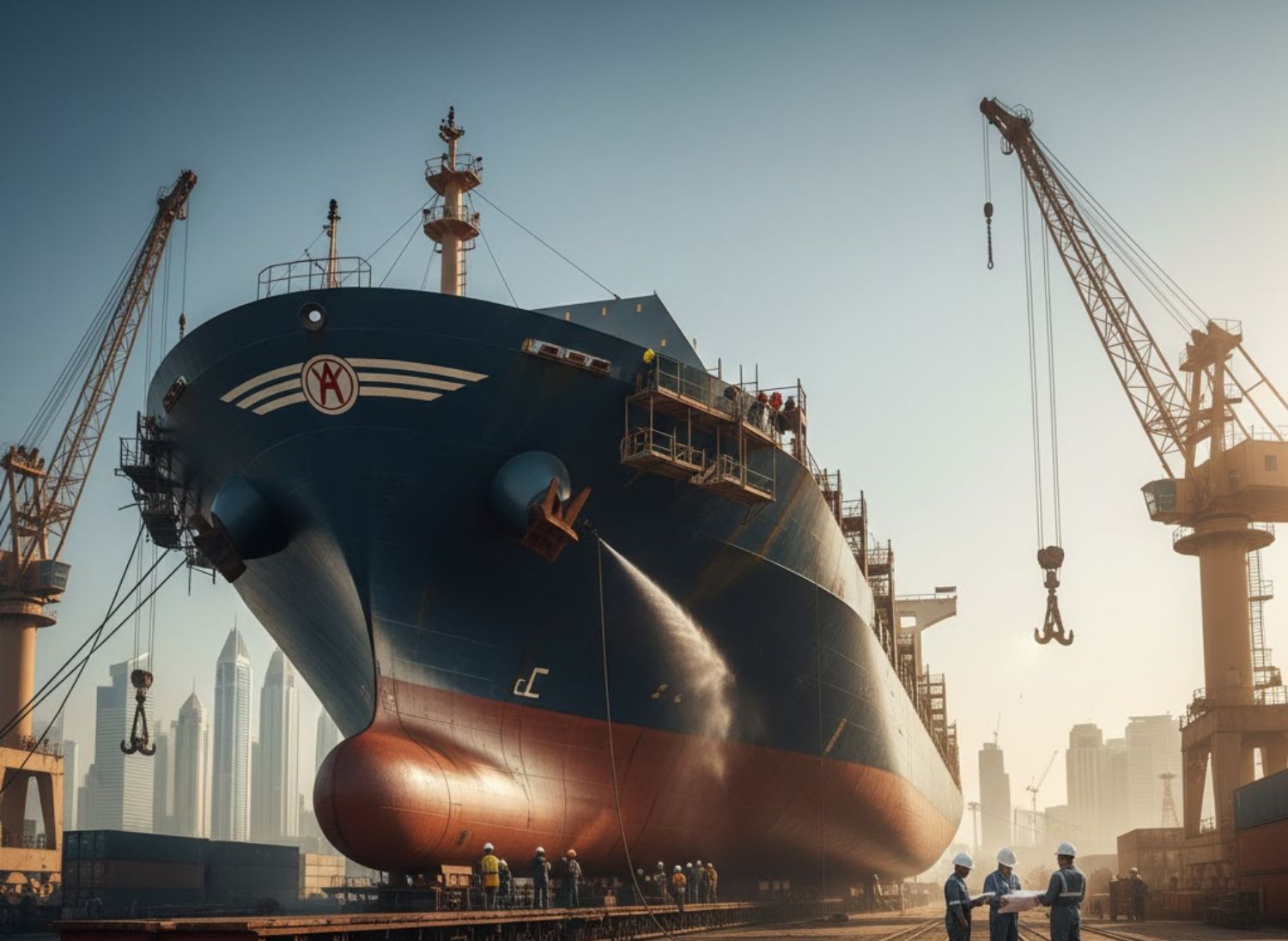
Preventive ship repair represents a fundamental shift from “fix it when it breaks” to “maintain it before it fails.” This proactive philosophy encompasses scheduled inspections, condition-based monitoring, predictive analytics, and systematic component replacement before failure occurs.
The Three Pillars of Preventive Maintenance:
Time-Based Maintenance follows manufacturer recommendations and regulatory requirements, performing interventions at predetermined intervals regardless of equipment condition. Engine overhauls every 8,000 running hours or annual hull inspections exemplify this approach.
Condition-Based Maintenance monitors actual equipment performance through sensors, vibration analysis, oil sampling, and thermal imaging. Repairs occur when data indicates declining performance, optimizing the timing between premature replacement and catastrophic failure.
Predictive Maintenance leverages advanced analytics and machine learning to forecast component failures weeks or months in advance, enabling perfectly timed interventions that maximize component lifespan while minimizing downtime.
For vessels operating in Dubai’s demanding conditions,extreme heat, high humidity, corrosive saltwater environment, and frequent port calls,this preventive approach isn’t optional; it’s essential for maintaining operational excellence.
Dubai’s maritime environment presents unique challenges that accelerate wear on specific vessel systems. Understanding these vulnerabilities enables targeted preventive strategies.
Main Engine and Auxiliary Systems: The region’s consistently high ambient temperatures (often exceeding 45°C in summer) stress cooling systems exceptionally. Preventive maintenance should include quarterly coolant analysis, heat exchanger cleaning every 6 months, and thermal efficiency testing. Fuel quality variations in regional bunkering ports necessitate frequent fuel filter inspections and injector cleaning to prevent performance degradation.
Hull and Coating Systems: The Arabian Gulf’s warm, saline waters promote accelerated biofouling and corrosion. Implementing a preventive hull maintenance schedule,including underwater inspections every 3-4 months, propeller polishing, and proactive coating touch-ups,maintains fuel efficiency and prevents costly drydock extensions. Studies show that vessels with quarterly hull cleaning maintain 5-8% better fuel efficiency compared to those cleaned only during scheduled drydockings.
HVAC and Refrigeration Units: Accommodation cooling systems work overtime in Dubai’s climate, making them prime candidates for preventive care. Monthly filter replacements, quarterly refrigerant level checks, and annual compressor overhauls prevent system failures that affect crew welfare and cargo integrity for refrigerated vessels.
Electrical and Automation Systems: High humidity combined with salt air creates ideal conditions for electrical component corrosion. Preventive maintenance programs should include monthly insulation resistance testing, quarterly control panel inspections, and semi-annual cable termination checks to avoid electrical fires and system failures.
Creating an effective preventive ship repair schedule requires balancing manufacturer recommendations, classification society requirements, operational demands, and budget constraints. Here’s a systematic approach proven effective in Dubai’s maritime sector.
Step 1: Conduct a Comprehensive Equipment Inventory Document every critical system aboard, including manufacturer details, installation dates, maintenance history, and failure criticality. This baseline assessment identifies high-priority equipment requiring intensive monitoring versus lower-risk systems suitable for extended maintenance intervals.
Step 2: Establish Risk-Based Prioritization Not all equipment failures carry equal consequences. A main engine breakdown creates catastrophic operational and financial impacts, while a galley appliance failure represents minor inconvenience. Assign risk scores (combining failure probability and consequence severity) to allocate preventive maintenance resources appropriately.
Step 3: Create Interval-Based Task Lists Organize maintenance activities into daily, weekly, monthly, quarterly, annual, and drydocking intervals. Daily tasks might include visual inspections and log readings, while annual activities encompass major overhauls and regulatory surveys. This structure ensures nothing falls through the cracks while distributing workload manageably across time.
Step 4: Implement Digital Maintenance Management Modern Planned Maintenance Systems (PMS) automate scheduling, track spare parts consumption, generate work orders, and provide analytics on maintenance effectiveness. Digital systems eliminate the manual paperwork burden that causes many preventive programs to fail, while providing real-time visibility for shore-based technical managers.
Step 5: Build Buffer Capacity for Dubai Port Stays Dubai’s efficient port operations mean vessels often have limited time alongside. Structure your preventive maintenance schedule to maximize work during port stays, pre-positioning spare parts and coordinating shore-based technicians to complete multiple tasks during each call.
Let’s examine specific preventive maintenance practices that deliver measurable results for vessels operating in Dubai waters.
Sample 1: Comprehensive Cooling System Preventive Program
Background: A 15-year-old container vessel experienced three emergency main engine shutdowns within six months due to cooling system failures, costing approximately $450,000 in lost charter income and emergency repairs.
Preventive Solution Implemented:
Results: Zero cooling-related shutdowns over the subsequent 18 months, with measured fuel efficiency improvements of 3.2% due to optimal engine operating temperatures. Total preventive program cost: $28,000 annually,a 16:1 return on investment.
Sample 2: Predictive Bearing Monitoring Program
Background: A bulk carrier suffered a catastrophic main shaft bearing failure requiring emergency drydocking in Dubai, incurring $780,000 in repair costs plus 12 days lost operational time.
Preventive Solution Implemented:
Results: System detected early wear indicators 6 weeks before projected failure, enabling planned repair during a scheduled drydocking. Repair cost: $140,000 (avoiding the emergency premium), with zero operational downtime impact. The monitoring system paid for itself in the first incident alone.
Sample 3: Fuel System Preventive Maintenance Protocol
Background: Inconsistent fuel quality from various bunkering locations caused fuel injection system problems, resulting in reduced engine performance and increased maintenance costs.
Preventive Solution Implemented:
Results: Fuel-related engine problems dropped by 87%, with measurable improvements in fuel consumption (4.1% reduction) and engine performance consistency. The program identified three occasions where contaminated bunkers would have caused severe engine damage if used without additional treatment.
Sample 4: Hull Performance Optimization Program
Background: A tanker operating in Gulf waters experienced steady fuel consumption increases, adding approximately $320,000 annually in excess fuel costs.
Preventive Solution Implemented:
Results: Maintained fuel efficiency within 2% of post-drydock performance throughout the operational period. Over 30 months between drydockings, the program saved approximately $425,000 in excess fuel costs while eliminating need for drydocking extension to address heavy fouling. Program cost: $85,000, delivering a 5:1 ROI.
Dubai’s strategic development as a maritime services hub provides vessel operators with exceptional resources for implementing preventive ship repair programs. Understanding and utilizing this infrastructure maximizes program effectiveness.
World-Class Repair Facilities: Dubai hosts modern shipyards equipped for repairs ranging from routine maintenance to major conversions. Drydock World Dubai, Jadaf Dubai Shipyard, and other facilities offer comprehensive services with short booking lead times compared to many global alternatives. Scheduling preventive drydockings in Dubai provides cost advantages while maintaining access to experienced technical specialists.
24/7 Spare Parts Availability: The emirate’s position as a global logistics center means critical spare parts are often available within hours rather than days. Establishing relationships with Dubai-based marine equipment suppliers enables just-in-time maintenance practices, reducing onboard spare parts inventory costs while ensuring rapid access when needed.
Technical Expertise and Certification: Dubai attracts highly skilled marine engineers, electricians, and technical specialists from around the world. This talent pool enables vessel operators to supplement crew expertise with shore-based specialists for complex preventive maintenance tasks, ensuring work meets classification society standards.
Classification Society Presence: All major classification societies maintain offices in Dubai, enabling rapid survey scheduling, technical consultations, and approval processes. This accessibility streamlines preventive maintenance planning, particularly for tasks requiring surveyor attendance or approval.
Ship operators naturally question whether preventive maintenance justifies its upfront costs. Comprehensive data demonstrates unequivocally that proactive programs deliver substantial financial returns.
Reduced Emergency Repair Costs: Emergency repairs typically cost 3-5 times more than planned maintenance due to premium technician rates, expedited parts shipping, and lack of competitive bidding. A vessel spending $200,000 annually on preventive maintenance typically avoids $500,000-$800,000 in emergency repair expenses.
Minimized Operational Downtime: Each day a commercial vessel sits idle for repairs represents lost charter income. For a medium-sized container vessel, daily charter rates often exceed $15,000-$25,000. Preventive maintenance that avoids just two days of unplanned downtime annually saves $30,000-$50,000 in lost income,often covering the entire annual preventive program cost.
Extended Equipment Lifespan: Properly maintained machinery operates reliably for significantly longer periods before requiring major overhauls or replacement. Main engines receiving excellent preventive care routinely exceed manufacturer-recommended operating hours by 20-30% before major rebuild, deferring capital expenses.
Improved Fuel Efficiency: Clean hulls, properly tuned engines, and well-maintained propulsion systems deliver measurable fuel savings. For vessels consuming 30-40 tons of fuel daily, even a 3-5% efficiency improvement from preventive maintenance generates annual savings of $250,000-$500,000 at current fuel prices.
Enhanced Resale Value: Vessels with documented preventive maintenance programs command premium prices in the second-hand market. Buyers recognize that well-maintained ships present lower operational risks and require less immediate capital investment, making comprehensive maintenance records valuable assets.
Transitioning from reactive to preventive maintenance requires structured implementation, technical expertise, and sustained commitment. Here’s how to begin your journey toward operational excellence.
Phase 1: Assessment and Planning (Weeks 1-4) Partner with experienced marine technical managers to conduct comprehensive vessel condition surveys. Document current maintenance practices, identify critical equipment vulnerabilities, and establish baseline performance metrics. This assessment phase creates the foundation for targeted preventive strategies.
Phase 2: Program Design and Resource Allocation (Weeks 5-8) Develop customized preventive maintenance schedules aligned with your vessel’s operational profile, trade routes, and specific equipment configurations. Establish spare parts stocking strategies, identify required technical training for crew members, and select appropriate maintenance management software platforms.
Phase 3: Initial Implementation (Months 3-6) Begin executing preventive maintenance tasks while maintaining flexibility to adjust intervals and procedures based on real-world results. This phase emphasizes crew training, procedure documentation, and establishing communication protocols between ship and shore teams.
Phase 4: Optimization and Continuous Improvement (Ongoing) Analyze maintenance data to identify trends, refine task intervals, and implement predictive maintenance technologies where appropriate. Regular program reviews ensure your preventive maintenance evolves with your operational needs and incorporates technological advances.
Arc Ship Management and Chartering brings decades of marine maintenance expertise to vessel operators throughout Dubai and the broader Middle East region. Our technical teams understand the unique challenges of Gulf operations and design preventive programs that deliver measurable operational and financial benefits. Whether managing a single vessel or an entire fleet, our comprehensive approach ensures your assets maintain peak performance while minimizing unexpected disruptions.
Even well-designed preventive maintenance programs encounter obstacles. Anticipating these challenges and having mitigation strategies ready increases program success rates.
Challenge 1: Crew Resistance to Change Crews accustomed to reactive maintenance may initially resist preventive programs, viewing additional tasks as unnecessary workload increases. Address this through education about program benefits, involving experienced crew members in program design, and celebrating early successes that demonstrate value.
Challenge 2: Budget Constraints Preventive maintenance requires upfront investment before delivering returns. Build support by quantifying current reactive maintenance costs, presenting ROI projections, and implementing programs incrementally, starting with highest-risk systems where benefits emerge quickly.
Challenge 3: Maintaining Consistency Operational pressures sometimes tempt crews or managers to defer preventive tasks. Combat this through automated scheduling systems, regular technical superintendent oversight, and including preventive maintenance performance metrics in crew evaluations.
Challenge 4: Spare Parts Management Effective preventive programs require parts availability without excessive inventory investment. Solve this through strategic partnerships with Dubai-based suppliers offering rapid delivery, implementing just-in-time inventory practices for non-critical components, and maintaining adequate stocks only for high-criticality items or long-lead-time components.
Maritime maintenance continues evolving through technological innovation and data analytics. Understanding emerging trends positions forward-thinking operators for competitive advantages.
Digital Twins and Simulation: Advanced software creates virtual replicas of shipboard systems, enabling maintenance teams to simulate equipment performance under various conditions, predict optimal intervention timing, and test maintenance strategies without risking actual equipment.
Internet of Things (IoT) Integration: Expanded sensor networks provide unprecedented visibility into equipment condition, transmitting real-time data to shore-based analytics platforms that detect anomalies instantly and recommend preventive actions.
Artificial Intelligence and Machine Learning: AI algorithms analyze maintenance history, operational data, and environmental conditions across entire fleets, identifying patterns invisible to human analysts and continuously refining maintenance interval recommendations.
Autonomous Inspection Technologies: Drones and robotic systems increasingly handle dangerous or difficult inspection tasks,hull inspections, tank surveys, and confined space assessments,improving inspector safety while increasing inspection frequency and quality.
The maritime industry’s transition from reactive to preventive maintenance represents more than operational methodology,it’s a fundamental business philosophy emphasizing long-term value over short-term cost minimization. For vessels operating in Dubai’s dynamic maritime environment, preventive ship repair delivers quantifiable benefits: dramatically reduced emergency expenses, minimized operational disruptions, extended equipment lifespan, and enhanced safety performance.
The samples and strategies outlined throughout this guide demonstrate that preventive maintenance isn’t theoretical,it’s practical, proven, and profitable. Vessels implementing comprehensive programs consistently outperform reactive counterparts across every meaningful metric: operational reliability, financial performance, environmental compliance, and safety records.
Dubai’s position as a global maritime center provides vessel operators with exceptional resources for implementing world-class preventive maintenance programs. From advanced repair facilities to 24/7 spare parts availability and deep technical expertise, the infrastructure supporting marine excellence exists. The question isn’t whether preventive maintenance works,decades of data confirm it does. The question is whether you’ll invest in prevention now or pay significantly more for reactive repairs later.
Arc Ship Management and Chartering stands ready to partner with vessel operators throughout the region, bringing comprehensive technical expertise, proven preventive maintenance methodologies, and unwavering commitment to operational excellence. Our teams understand that every vessel presents unique challenges and opportunities, and we design customized programs that deliver measurable results aligned with your specific operational requirements.
Begin your preventive maintenance journey today. Contact our technical team to schedule a comprehensive vessel assessment and discover how proactive care transforms operational performance while protecting your maritime investments for years to come.
Ready to Transform Your Vessel Maintenance Approach?
Connect with Arc Ship Management and Chartering’s technical experts to discuss your specific requirements and learn how our preventive ship repair programs deliver measurable operational and financial benefits. Don’t wait for the next breakdown,invest in prevention now.

Head Office : SHED #182B AL JADDAF DRYDOCK WORLD, P.O BOX -65565, DUBAI, UAE
Tel: +971 555787949
Email: info@arcship.ae
© ARCSHIP MANAGEMENT. All rights reserved.