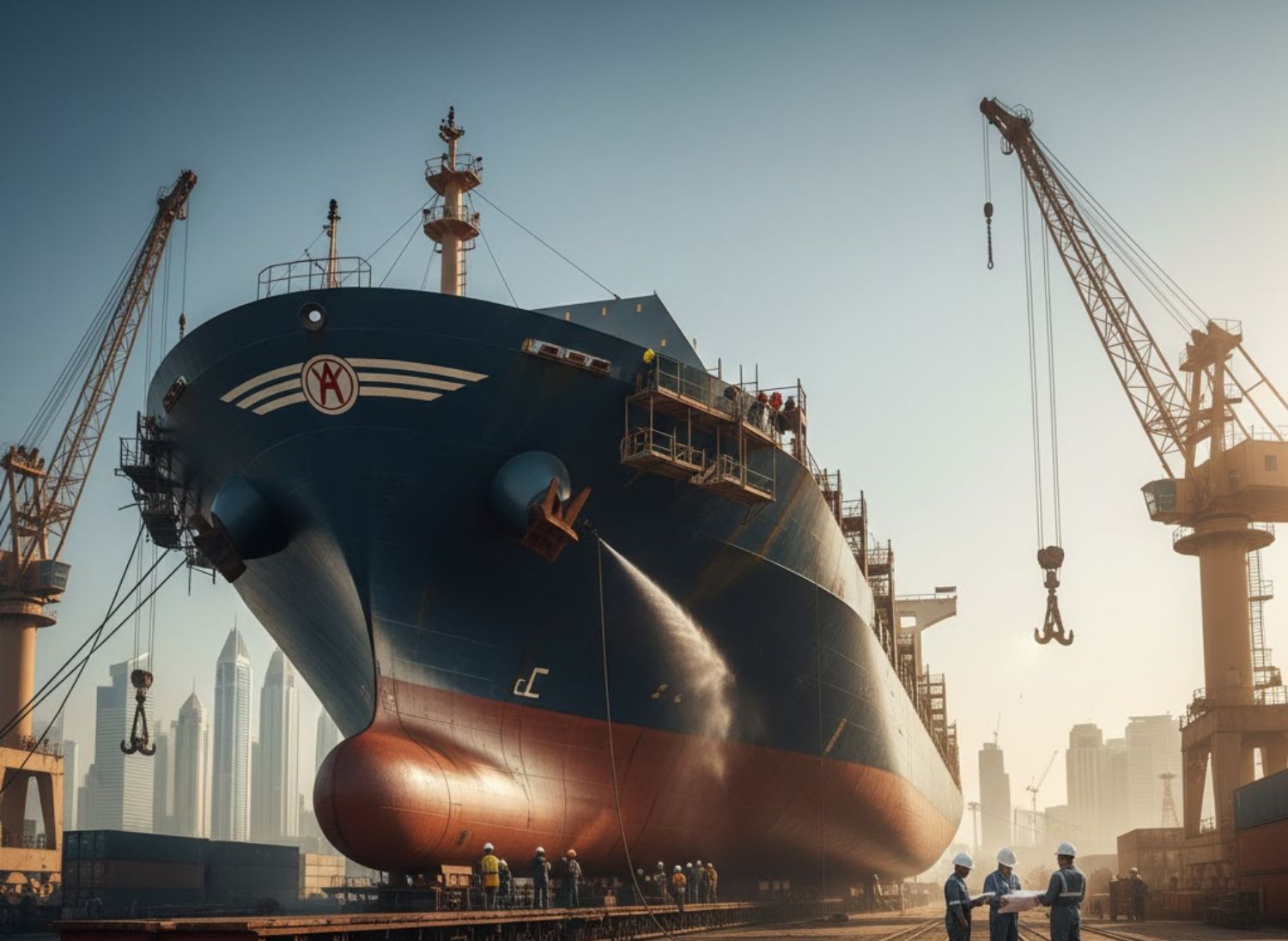
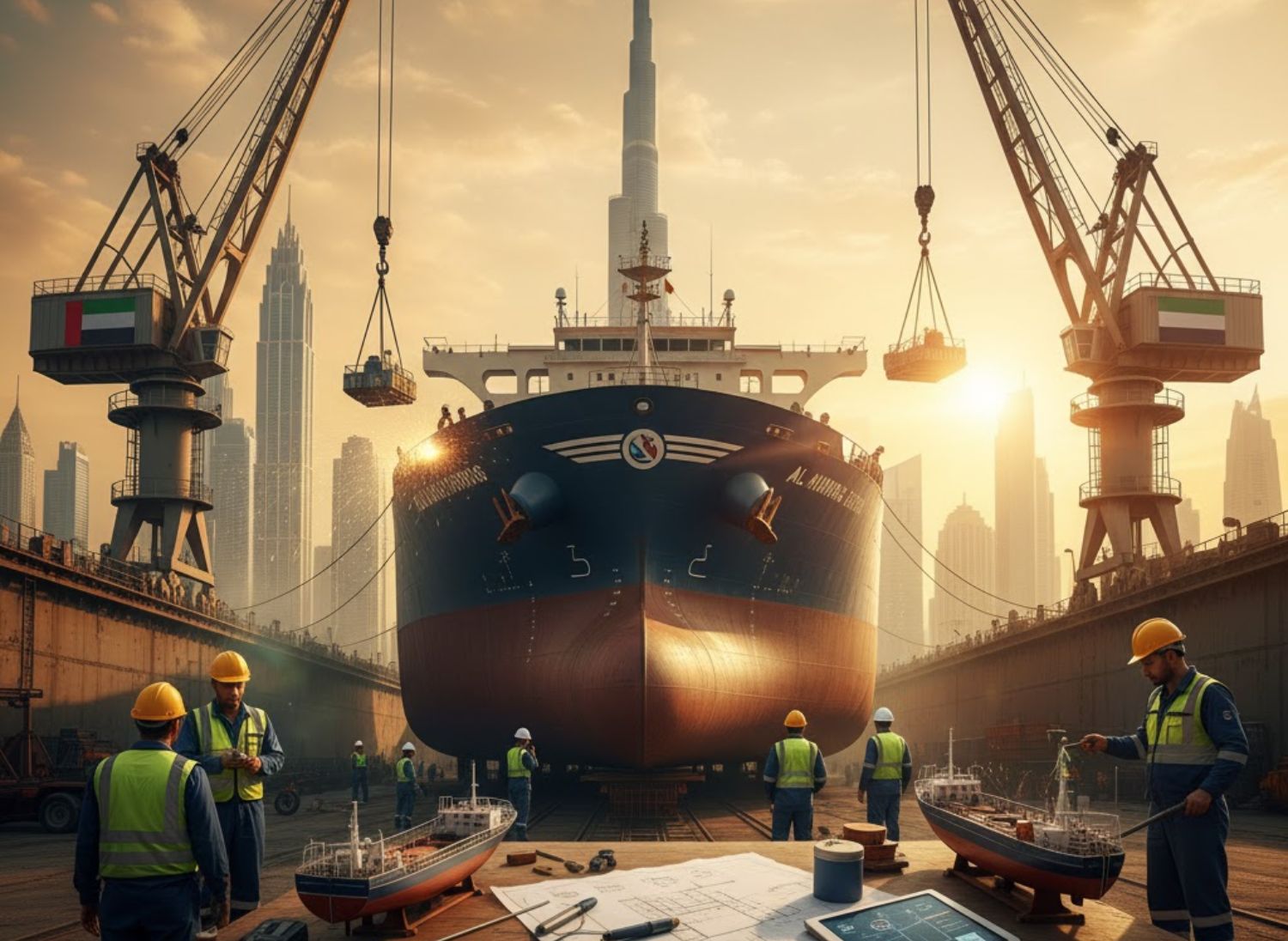
Vessel Docking in Dubai: Mastering Marine Engineering Excellence in the World’s Busiest Maritime Hub
Introduction Picture this scenario: A fully loaded container vessel approaches...
Read More

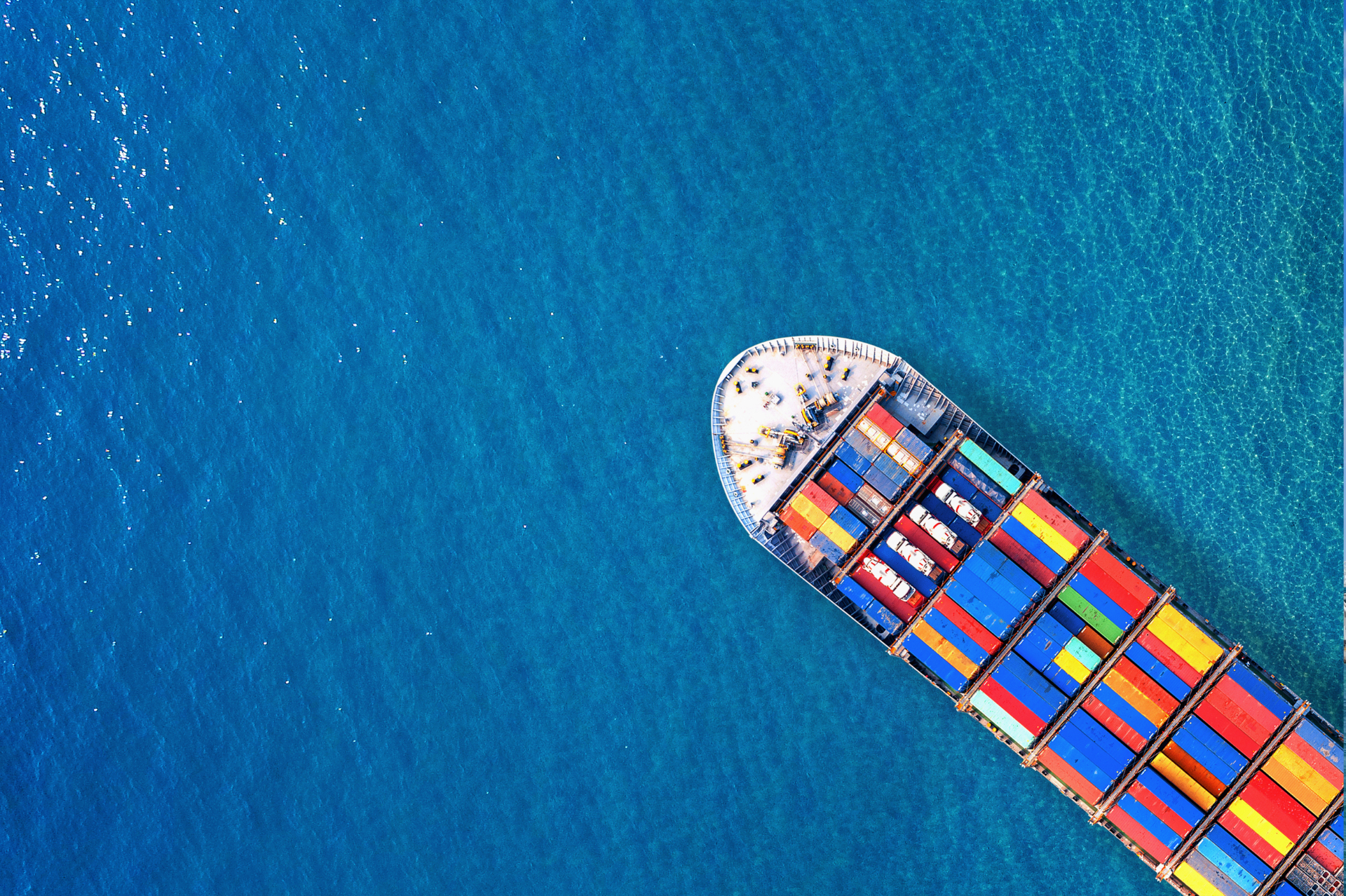
Picture this scenario: A fully loaded container vessel approaches Dubai’s bustling port facilities during peak operational hours. The vessel has a 12-hour berthing window to discharge 2,500 TEUs, take on bunkers, complete mandatory inspections, conduct urgent repairs, and reload cargo,all while coordinating with port authorities, pilot services, linesmen, marine engineers, and cargo handlers. A single miscalculation in the vessel docking process or an overlooked marine engineering issue could cascade into delays costing tens of thousands of dollars per hour.
Table of Contents
ToggleThis high-stakes operational reality defines daily maritime activities across Dubai’s world-class port infrastructure. As the Middle East’s preeminent maritime gateway, Dubai handles over 15 million TEUs annually while serving as a critical hub for tanker operations, cruise vessels, and offshore support activities. Success in this demanding environment requires exceptional expertise in both vessel docking procedures and comprehensive marine engineering capabilities.
At Arc Ship Management and Chartering, we’ve orchestrated thousands of successful vessel docking operations across Dubai’s diverse port facilities while delivering marine engineering solutions that keep vessels operating at peak performance. This comprehensive guide reveals the strategies, technical insights, and best practices that separate exceptional maritime operations from merely adequate ones.

Vessel docking encompasses far more than simply bringing a ship alongside a berth. It represents a complex, multi-phase operation requiring precise coordination between shipboard teams, shore personnel, port authorities, and marine engineering specialists.
The Complete Docking Lifecycle:
Pre-Arrival Planning begins days or weeks before the vessel reaches Dubai waters. This phase involves berth allocation coordination, pilot booking, tug reservation, marine engineering work scope finalization, spare parts procurement, and regulatory documentation preparation. Effective pre-planning reduces port stay duration by 20-30%, directly impacting operational costs.
Approach and Pilotage commences when vessels enter Dubai’s pilotage waters. Licensed maritime pilots board the vessel, assuming navigational responsibility for the final approach to the berth. During this critical phase, marine engineering teams ensure all propulsion, steering, and auxiliary systems perform flawlessly, as any malfunction during maneuvering creates dangerous situations.
Berthing Operations require millimeter-precision maneuvering, often in challenging conditions including strong currents, limited maneuvering space, and adjacent vessel traffic. Master mariners coordinate with pilots, tug operators, and mooring teams to position the vessel safely against the berth, with marine engineering teams maintaining optimal power and steering response throughout.
Alongside Operations represent the productive phase where cargo operations, bunkering, marine engineering repairs, surveys, crew changes, and provisioning occur simultaneously. Maximizing efficiency during this period directly correlates with operational profitability.
Departure Preparation and Unberthing involves systematic pre-departure checks, final marine engineering systems verification, cargo securing, and coordinated release from berth,essentially reversing the arrival process with equal precision.
Dubai’s maritime infrastructure encompasses multiple specialized facilities, each designed for specific vessel types and cargo operations. Understanding these options enables optimal facility selection for your vessel docking requirements.
Jebel Ali Port stands as the world’s ninth-largest container port and the busiest in the Middle East. Its four terminals offer 82 berths with drafts up to 17 meters, accommodating the largest container vessels afloat. The port’s marine engineering support infrastructure includes comprehensive repair workshops, extensive spare parts availability, and round-the-clock technical services.
Port Rashid serves diverse vessel types including cruise ships, general cargo vessels, and Ro-Ro operations. Located closer to central Dubai, this facility offers strategic advantages for vessels requiring access to urban-based marine engineering specialists, equipment suppliers, and crew amenities. The port features 32 berths with varying drafts suitable for most commercial vessels.
Dubai Dry Docks provides comprehensive repair, maintenance, and conversion services across five graving docks and numerous floating docks. This facility handles everything from routine underwater inspections to major vessel conversions, offering complete marine engineering capabilities under one roof.
Mina Rashid Cruise Terminal caters specifically to the booming cruise industry, featuring dedicated passenger facilities alongside comprehensive marine engineering support for luxury cruise vessels with specialized technical requirements.
Offshore and Anchorage Areas serve vessels awaiting berth availability, conducting ship-to-ship transfers, or performing repairs that don’t require alongside berths. These areas still require careful coordination with Dubai’s maritime authorities and often involve marine engineering teams transported to vessels by workboats.
Dubai’s unique environmental conditions and operational tempo create specific marine engineering challenges requiring specialized expertise and proactive management.
Extreme Temperature Management: Summer ambient temperatures regularly exceed 45°C, placing extraordinary stress on engine cooling systems, HVAC units, refrigeration equipment, and electrical components. Marine engineering teams operating in Dubai must implement enhanced cooling system monitoring, increased heat exchanger cleaning frequency, and proactive component replacement strategies to prevent heat-related failures.
Seawater Quality and Corrosion: The Arabian Gulf’s high salinity levels accelerate corrosion throughout seawater-cooled systems. Marine engineering best practices in Dubai include aggressive zinc anode replacement schedules, increased frequency of heat exchanger inspections, and specialized coating applications for underwater hull fittings and sea chests.
Fuel Quality Variability: Despite Dubai’s reputation for quality marine fuels, vessels bunkering from various regional sources may encounter inconsistent fuel specifications. Comprehensive marine engineering protocols include mandatory fuel testing, separator optimization, and injection system monitoring to prevent fuel-related machinery problems.
Regulatory Compliance: Dubai Port Authority and UAE maritime authorities enforce strict environmental and safety regulations. Marine engineering teams must ensure vessels meet all applicable requirements including MARPOL Annex VI emissions standards, ballast water treatment system functionality, and oil pollution prevention equipment operability.
Rapid Turnaround Expectations: Dubai’s efficiency-focused port operations demand quick vessel docking turnarounds. Marine engineering work must be meticulously planned and executed to maximize productivity during limited alongside time, requiring pre-positioned parts, coordinated technician scheduling, and precise work sequencing.
Exceptional vessel docking operations result from detailed planning executed with precision. Here’s the systematic approach proven effective in Dubai’s demanding maritime environment.
Phase 1: Initial Planning (7-14 Days Before Arrival)
Contact Dubai Port Authority to confirm berth availability and reserve preferred docking window. Factor in operational requirements,container vessels need specific crane-equipped berths, tankers require manifold-compatible facilities, and vessels needing marine engineering work should target berths near repair workshops.
Submit required documentation including vessel particulars, cargo declarations, crew lists, maritime declarations of health, and security-related paperwork. Incomplete documentation delays berthing approval and creates costly port stay extensions.
Coordinate with marine engineering service providers to schedule required work. Provide detailed work scopes, parts lists, and estimated durations to enable proper resource allocation. Pre-position critical spare parts at Dubai warehouses to avoid delays waiting for international shipments.
Phase 2: Final Coordination (48-72 Hours Before Arrival)
Confirm pilot boarding time and location, typically at designated pilot stations off Dubai’s coast. Verify tug requirements based on vessel size, weather conditions, and berth configuration,larger vessels often require 3-4 tugs for safe maneuvering.
Reconfirm marine engineering appointments, ensuring technicians, surveyors, and equipment suppliers are scheduled appropriately. Coordinate timing to avoid conflicts between cargo operations, bunkering, and marine engineering activities.
Conduct detailed pre-arrival vessel checks, ensuring all navigation equipment, propulsion systems, steering gear, and deck machinery function perfectly. Any deficiencies discovered at this stage can still be addressed before the critical maneuvering phase.
Phase 3: Arrival Execution (Day of Berthing)
Maintain close communication with port control, providing accurate ETA updates. Pilots board at the designated station, bringing local knowledge of currents, typical wind patterns, and berth-specific approach requirements.
Marine engineering teams ensure all machinery operates optimally during maneuvering,main engines must deliver immediate response, steering gear must exhibit precise control, and auxiliary systems must maintain stable power generation. Bridge teams and engine room personnel maintain constant communication throughout the evolution.
Once alongside, immediately commence planned activities. Delays between berthing and work commencement waste valuable alongside time. Pre-staged marine engineering teams should begin work within 30 minutes of securing alongside.
Phase 4: Alongside Optimization (During Port Stay)
Implement rigorous coordination between competing activities. Cargo operations typically take priority, but marine engineering work often proceeds simultaneously in engine rooms, accommodation spaces, or on deck areas not involved in cargo handling.
Conduct daily progress meetings with cargo planners, marine engineering contractors, chandlers, and other service providers. Address delays immediately rather than discovering timeline slippages at the last minute.
Prepare departure paperwork progressively rather than scrambling during the final hours alongside. Complete customs declarations, port clearances, and marine engineering completion certificates systematically throughout the port stay.
Phase 5: Departure and Debriefing (Final Hours and Post-Departure)
Execute comprehensive pre-departure checks covering all systems critical for safe navigation,steering gear tests, telegraph tests, emergency equipment verification, and marine engineering systems final status confirmation.
Coordinate unberthing with pilot services, tug operators, and port control. Weather windows matter significantly; attempting departure during adverse conditions creates unnecessary risk regardless of schedule pressure.
After clearing port limits, conduct post-departure debriefing with crew and shore management. Identify what went well, what could improve, and lessons learned for future vessel docking operations in Dubai. Document marine engineering work completed and outstanding items for future port calls.
Even meticulously planned vessel docking operations encounter obstacles. Anticipating common challenges and having contingency strategies ready distinguishes excellent operators from average ones.
Challenge 1: Weather-Related Delays
Dubai’s shamal winds can create challenging berthing conditions, occasionally forcing vessels to delay arrival or remain at anchorage. While frustrating, attempting berthing in unsafe conditions risks vessel damage, berth damage, and personnel injury.
Solution: Monitor weather forecasts continuously during the approach phase. Maintain flexible scheduling that accommodates weather-related adjustments. Communicate proactively with charter parties and cargo interests about weather-driven delays, providing professional weather reports rather than vague explanations.
Challenge 2: Berth Availability Changes
Port congestion occasionally forces last-minute berth reassignments, potentially impacting carefully planned operations. A vessel expecting to berth at a facility with convenient marine engineering workshop access might get reassigned to a remote berth requiring additional transportation time for technicians.
Solution: Develop contingency plans for alternative berths. Maintain relationships with marine engineering service providers offering mobile capabilities who can work effectively at any berth location. Build schedule buffers that accommodate minor berth assignment changes without cascading delays.
Challenge 3: Parts and Supply Delays
Despite Dubai’s excellent logistics infrastructure, critical spare parts occasionally arrive late, potentially extending port stays and triggering expensive demurrage.
Solution: Order long-lead-time items well in advance. Utilize Dubai-based marine engineering suppliers maintaining extensive local inventory for common components. For truly critical items, consider air freight rather than sea freight to ensure timely availability.
Challenge 4: Coordination Failures
Multiple service providers working simultaneously,cargo handlers, marine engineering contractors, chandlers, surveyors,sometimes conflict, creating inefficiency and delays.
Solution: Designate a single point of coordination (typically the Chief Officer for operational matters and Chief Engineer for marine engineering work) who maintains the master schedule and resolves conflicts. Conduct brief morning coordination meetings during multi-day port stays, ensuring all parties understand daily priorities and potential conflicts.
Dubai’s development as a maritime center has attracted comprehensive marine engineering expertise, creating one-stop capability for virtually any vessel requirement.
Emergency Repairs and Troubleshooting: Round-the-clock marine engineering teams respond to urgent breakdowns, providing diagnostic expertise and rapid repair capabilities. Whether facing electrical failures, hydraulic problems, automation issues, or machinery breakdowns, Dubai-based engineers deliver solutions that minimize operational disruption.
Planned Maintenance and Overhauls: Scheduled alongside time provides opportunities for maintenance activities impractical at sea. Dubai’s marine engineering workshops execute main engine overhauls, generator servicing, pump rebuilds, valve replacements, and countless other maintenance tasks with efficiency honed by thousands of similar projects.
Specialized Technical Services: Beyond basic mechanical repairs, Dubai offers specialized marine engineering capabilities including electronic navigation equipment calibration, automation system programming, dynamic positioning system servicing, propulsion control system maintenance, and sophisticated electrical troubleshooting.
Classification Society Surveys: All major classification societies maintain Dubai offices with surveyor availability for annual surveys, intermediate surveys, machinery inspections, and special surveys. This accessibility streamlines regulatory compliance, enabling efficient scheduling that minimizes port stay extensions.
Underwater Services: Without requiring drydocking, Dubai-based diving companies execute underwater hull inspections, propeller polishing, sea chest cleaning, anode replacement, and minor underwater repairs. These services maintain vessel performance between drydocking periods.
Testing and Commissioning: For vessels installing new equipment or completing major repairs, Dubai’s marine engineering infrastructure supports comprehensive testing protocols, load bank testing, performance trials, and commissioning procedures that verify work quality before departure.
Port costs, service fees, and alongside time expenses accumulate rapidly during vessel docking operations. Strategic approaches minimize these costs without compromising safety or work quality.
Minimize Port Stay Duration: Every hour alongside incurs port charges, often ranging from hundreds to thousands of dollars depending on vessel size. Efficient pre-planning, coordinated execution, and parallel activity scheduling reduce total alongside time, directly cutting port costs. A container vessel reducing port stay from 18 hours to 14 hours might save $8,000-$12,000 in port charges alone.
Bundle Marine Engineering Services: Scheduling multiple marine engineering tasks during a single port call proves far more economical than multiple short calls. Travel time, mobilization costs, and minimum service charges apply whether technicians work two hours or ten. Batching work into efficient blocks maximizes value from service provider expenses.
Leverage Dubai’s Competitive Market: Dubai’s concentration of marine engineering service providers creates healthy competition. Obtaining multiple quotations for non-emergency work often reveals significant price variations. However, balance cost against quality,the cheapest provider isn’t always the best value if work quality proves substandard.
Optimize Timing: Port charges often vary by time of day, day of week, or season. If operational flexibility exists, scheduling vessel docking during lower-rate periods generates savings. Similarly, marine engineering service providers sometimes offer better rates during their slower periods.
Prevent Rather Than Repair: The most cost-effective marine engineering is preventive maintenance that avoids breakdowns entirely. Vessels implementing comprehensive preventive programs rarely face expensive emergency repairs during port calls, eliminating both the premium cost of emergency services and the potentially massive cost of extended port stays.
Safety represents the maritime industry’s paramount value, and vessel docking operations combined with marine engineering work create numerous hazards requiring disciplined management.
Mooring Safety: Parting mooring lines under tension can cause catastrophic injuries. Establish and enforce exclusion zones around bitts, fairleads, and line runs. Never stand in the “line of fire”,the path a parting line would travel. Use synthetic mooring lines where appropriate, as they store less energy than steel wire and create less hazardous recoil if parting.
Working at Heights: Marine engineering work often involves accessing elevated equipment,funnel platforms, mast-mounted antennas, or overhead piping. Implement comprehensive fall protection using proper harnesses, lanyards, and anchor points. Never skip fall protection for “quick” tasks; most accidents occur during brief jobs where personnel shortcut safety procedures.
Confined Space Entry: Engine room tankage, double bottoms, and void spaces require marine engineering access for inspection and maintenance. Treat these areas as confined spaces requiring atmospheric testing, ventilation, standby personnel, communication equipment, and emergency rescue plans before entry.
Hot Work Permits: Welding, cutting, and grinding during marine engineering repairs create fire and explosion hazards. Implement formal hot work permit systems requiring fire watches, portable firefighting equipment positioning, and flammable material removal from work areas.
Contractor Safety Management: External marine engineering contractors may have different safety cultures than vessel crews. Brief contractors on vessel-specific hazards, require them to follow vessel safety procedures, and assign crew members to supervise contractor activities. Don’t assume contractors automatically understand marine safety requirements.
Simultaneous Operations (SIMOPS): When marine engineering work occurs simultaneously with cargo operations or bunkering, establish clear communication protocols and segregation measures. Cargo holds being worked should be clearly marked as no-access for marine engineering personnel to prevent conflicts.
Digital innovation revolutionizes traditional maritime operations, offering capabilities that seemed impossible just years ago. Forward-thinking operators embrace these technologies to gain competitive advantages.
Digital Port Call Optimization: Advanced platforms coordinate all participants in vessel docking operations,shipping lines, port authorities, pilots, agents, and service providers,through shared digital platforms. Real-time visibility into port conditions, berth availability, and service provider scheduling enables dynamic optimization that reduces port stay duration and improves resource utilization.
Remote Marine Engineering Diagnostics: Modern vessel machinery systems collect operating data that shore-based marine engineering experts analyze remotely. Emerging problems trigger alerts long before crew members notice symptoms, enabling proactive parts ordering and technician scheduling before the vessel even reaches Dubai.
Augmented Reality (AR) Maintenance Support: Marine engineering technicians wearing AR glasses receive real-time guidance from shore-based experts who see exactly what the technician sees. Complex repairs proceed faster with fewer errors when less experienced personnel receive expert support regardless of physical location.
3D Printing for Spare Parts: Dubai’s marine engineering sector increasingly uses additive manufacturing to produce certain spare parts on demand. Rather than waiting days for international shipment of a non-critical component, metal or polymer 3D printing produces replacement parts within hours, reducing vessel docking delays.
Autonomous Berthing Systems: Advanced vessels now feature automated docking systems using sensors, GPS, and propulsion control to berth with minimal human intervention. While not yet universal, this technology will gradually reduce pilotage requirements for routine vessel docking operations, though specialized situations will still require traditional piloting expertise.
Dubai hosts hundreds of marine engineering service providers, making partner selection crucial for operational success. Consider these factors when evaluating potential partners:
Technical Capability Breadth: Does the provider offer comprehensive capabilities covering propulsion systems, electrical systems, automation, hydraulics, deck machinery, and accommodation systems? Single-source providers simplify coordination compared to managing multiple specialized contractors.
Response Time Reliability: In maritime operations, time equals money. Providers promising rapid response must consistently deliver. Request references from current clients about actual response times, not just marketing promises.
Quality and Safety Records: Substandard marine engineering work creates risks far exceeding any cost savings. Investigate providers’ safety records, quality control processes, technician qualifications, and whether they hold relevant ISO certifications or classification society approvals.
Parts Supply Integration: Providers with strong relationships to parts suppliers or maintaining their own parts inventory reduce delays. The best marine engineering companies often supply parts seamlessly as part of repair services rather than requiring vessel operators to source parts separately.
Communication and Documentation: Professional marine engineering providers communicate clearly throughout work execution, document work thoroughly, and provide comprehensive completion reports. This professionalism proves invaluable for record-keeping, insurance claims, and classification society submissions.
Arc Ship Management and Chartering maintains long-standing relationships with Dubai’s premier marine engineering service providers, enabling our clients to access proven expertise efficiently. Our technical superintendents personally oversee complex marine engineering projects, ensuring work quality meets the high standards commercial vessel operations demand.
UAE maritime authorities enforce increasingly stringent environmental regulations, and non-compliance creates financial penalties and reputational damage. Vessel docking operations and marine engineering activities must address these requirements.
Emissions Control: Dubai falls within regions where MARPOL Annex VI emissions limits apply. Vessels must demonstrate compliance with sulfur oxide limitations (currently 0.50% fuel sulfur content globally, with even lower limits in designated emission control areas). Marine engineering teams should verify fuel quality, emission control system operation, and maintain documentation proving compliance.
Wastewater Management: Discharge of sewage within Dubai’s territorial waters requires approved treatment systems meeting international standards. Many berths provide shore-side sewage reception, and vessels should utilize these facilities rather than discharging treated wastewater alongside.
Garbage and Waste: Dubai Port Authority provides comprehensive waste reception facilities for garbage, oily waste, sludge, and contaminated materials. Proper segregation and disposal through approved channels is mandatory. Marine engineering work often generates waste materials requiring proper classification and shore disposal.
Ballast Water Treatment: Vessels conducting ballast operations in UAE waters must comply with ballast water management regulations. Marine engineering teams maintain ballast water treatment systems, document treatment operations, and ensure record books accurately reflect compliance activities.
Oil Pollution Prevention: Equipment failures creating oil pollution during vessel docking operations trigger severe penalties and potentially vessel detention. Marine engineering preventive maintenance of bilge systems, oil-water separators, and fuel transfer equipment prevents environmentally damaging incidents.
Success in Dubai’s competitive maritime environment demands operational excellence across every dimension,from meticulous vessel docking planning through expert marine engineering execution. The strategies, insights, and best practices outlined throughout this guide reflect decades of collective experience managing vessel operations in one of the world’s most dynamic maritime hubs.
Vessel docking operations represent far more than simply bringing a ship alongside a berth. They’re complex orchestrations requiring precise coordination among dozens of participants, all working toward common objectives: safety, efficiency, regulatory compliance, and cost-effectiveness. Similarly, marine engineering excellence extends beyond simply fixing broken equipment to encompass proactive maintenance, predictive diagnostics, and strategic partnerships that keep vessels operating reliably.
Dubai’s maritime infrastructure,world-class ports, comprehensive marine engineering capabilities, efficient regulatory processes, and deep technical expertise,provides vessel operators with exceptional resources. The question isn’t whether these resources exist, but whether your operations fully leverage them to maximum advantage.
Arc Ship Management and Chartering brings comprehensive expertise in both vessel docking coordination and marine engineering management to commercial vessel operators throughout the Middle East and beyond. Our technical superintendents understand the nuances of Dubai’s maritime environment, maintain relationships with proven service providers, and deliver the hands-on oversight that ensures every port call achieves its objectives efficiently and safely.
Whether you’re planning a single vessel call to Dubai or managing regular operations through UAE ports, partnering with experienced professionals transforms routine port calls into competitive advantages. Efficient vessel docking saves time and money. Expert marine engineering prevents costly breakdowns. Professional coordination reduces stress and uncertainty.
The maritime industry continually evolves, with new technologies, changing regulations, and rising expectations. Operators who embrace best practices, leverage available expertise, and commit to continuous improvement position themselves for sustained success regardless of industry challenges.
Transform Your Dubai Port Operations
Contact Arc Ship Management and Chartering today to discuss how our vessel docking coordination and marine engineering expertise delivers measurable operational improvements. Our technical teams stand ready to support your vessels throughout Dubai’s maritime facilities with professionalism, expertise, and unwavering commitment to excellence.

Head Office : SHED #182B AL JADDAF DRYDOCK WORLD, P.O BOX -65565, DUBAI, UAE
Tel: +971 555787949
Email: info@arcship.ae
© ARCSHIP MANAGEMENT. All rights reserved.